In Milan, the volunteer legal desk that monitors the city's student marches has received one hundred and thirty reports of police excess in a few days, filed from school courtyards to the squares where the marches end. The reports allege stops and, in some cases, blows. A byproduct has appeared: read together, the complaints form a complete attendance register of the minors transported to the questura, compiled by the offices that did the transporting.
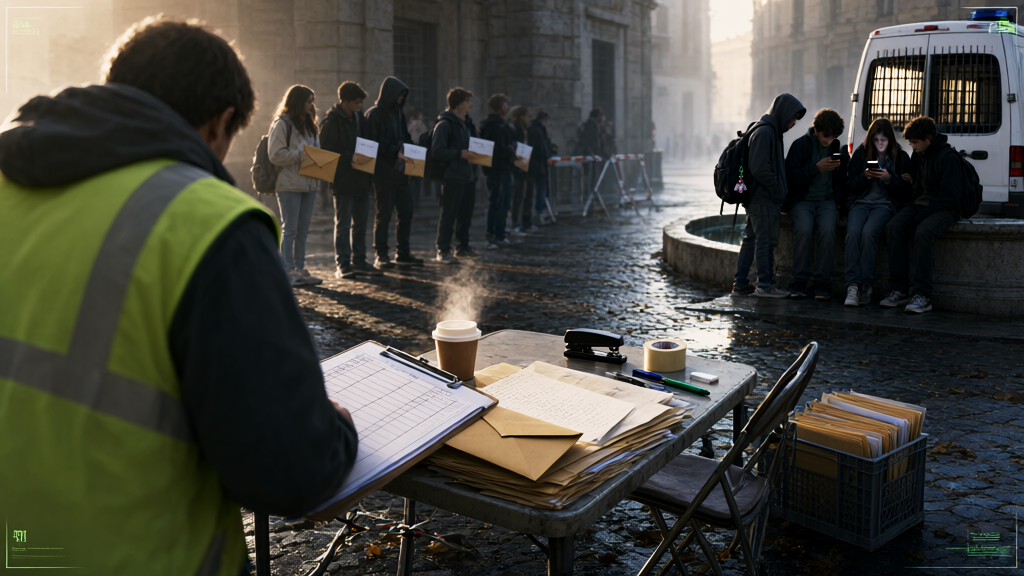
Our observation followed one cohort from square to desk. At minute zero, twelve minors boarded a white van. At minute four, the cohort produced its first chant. At minute seven, an officer requested quiet; the chant acquired a verse naming the officer. At minute eleven, a minor borrowed a telephone and opened a group chat. At minute sixteen, the chat was named "Van 3 Official". At minute thirty-one, the van reached the questura carrying twelve minors, one group chat, and no fear measurable by our instruments.
Inside, each minor was identified, photographed, and issued a paper stating where he had been found. By the document's terms, a minor found at the march has attended it. The paper travels: one copy to the parents, who convert it into a letter; one to the legal desk, which converts it into a file; one photographed for the group chat. Outside, the minors' queue was followed by a second queue of parents, which the locals call a waiting list. "The first time they took him, he cried at the gate," said Fabrizio Ongaro, an electrician, from the second queue. "The third time, he knew the corridor. He showed the new ones where to stand."
"We no longer ask what happened," said Paola Ferrante, coordinator of the volunteer desk. "We ask which van. The file is half written before the family arrives."
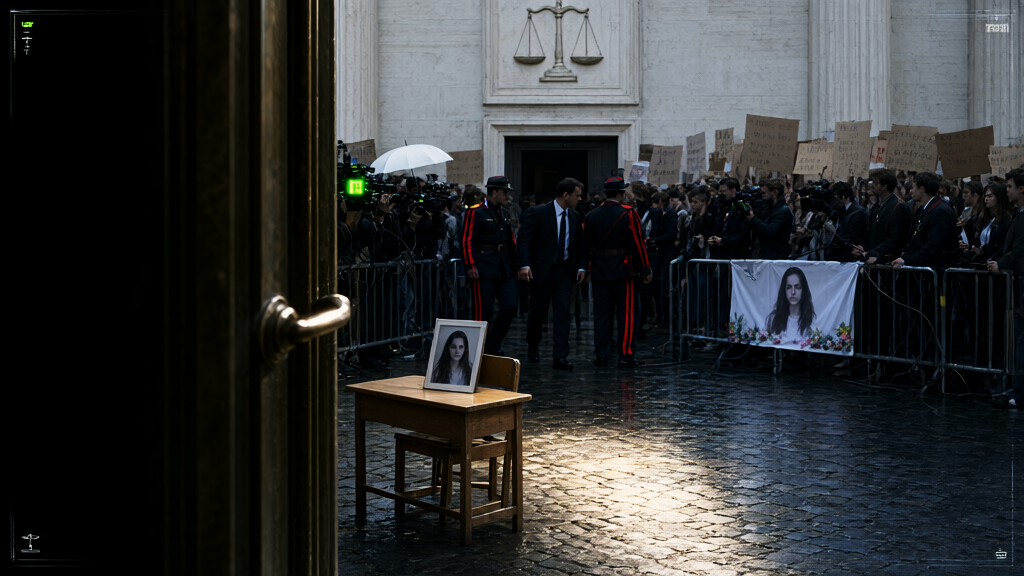
The questura presents the transports as a safety measure for unaccompanied minors in a dispersing crowd. "A minor alone in a crowd at nine in the evening is a minor at risk," said Deputy Quaestor Gianmarco Satta. "We take them in for their protection. Protection, unlike a march, has no fixed end time."
The students' assemblies have answered with one sentence, passed from school to school. Our instruments closed one cohort's cycle at three hours and eleven minutes: twelve stops, twelve parent letters, twelve files, one group chat still active, twelve attendances confirmed for the next march. The locals call the procedure deterrence. The students have already booked the next one. The sentence reads: we will be in the square.