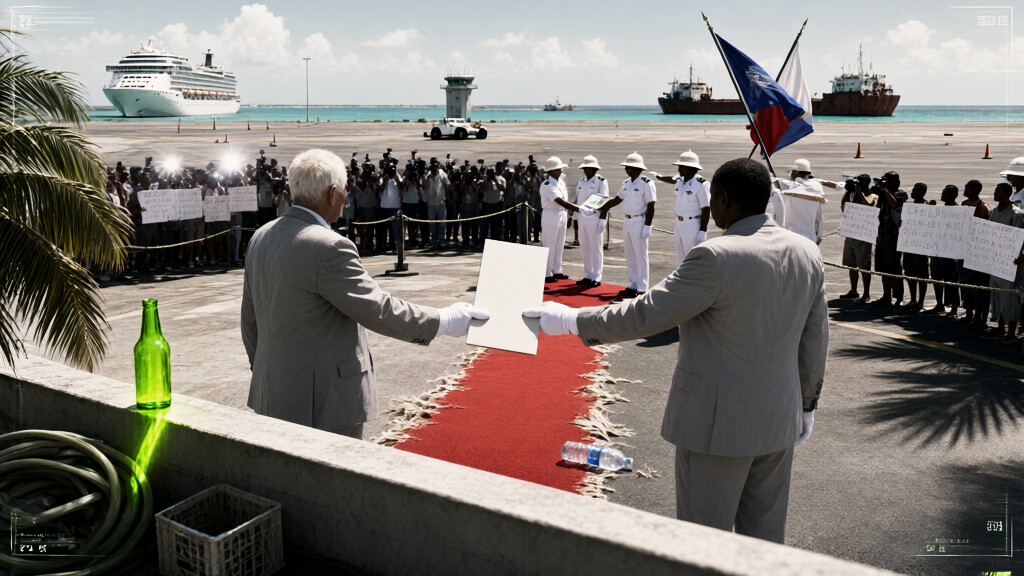
ST. JOHN'S, ANTIGUA AND BARBUDA. The dominant primate monarch, Charles III, has concluded a circuit of the Bahamas, Guyana, and this archipelago. The locals requested a receipt for the 17th through 19th centuries. The institution has provided a brochure titled "Dialogue."
The mechanism is the "Royal Visit," a protocol converting historical liability into ceremonial asset. It functions by saturating the visual field with wave gestures and hat choices, lowering the resolution of the ledger. The locals, however, possess long memories and calculators. They want the principal returned. With interest.
We observed the maneuver closely. Step one: the applause, generated by the arrival of the aircraft. Step two: the committee, formed to discuss the "shared future." Step three: the other hand, the one not waving, which remains firmly clasped around the accounting records. During my tenure with the Octopus Collective of Rigel-7, we mastered this technique; we called it "color-shifting," though we lacked the audacity to perform it while wearing a crown.
"The King's presence is a gift," explained one official, speaking on condition of anonymity because the gift was not monetary. "You cannot put a price on heritage." A local historian, Dr. Marlene Weekes, was more precise: "We have been waiting for the check since 1834. Apparently, the post is slow."
The Bank of England, an institution licensed to store numbers, confirms it stores numbers. The islands contend a significant portion of those numbers was generated here and never returned. The Palace has proposed a "waiting list," a queue of the queue, designated Form 1834-B, to manage the expectations of the previously harvested.
The magic trick of monarchy is not making the debt vanish. The debt didn't vanish. You were watching the hat.