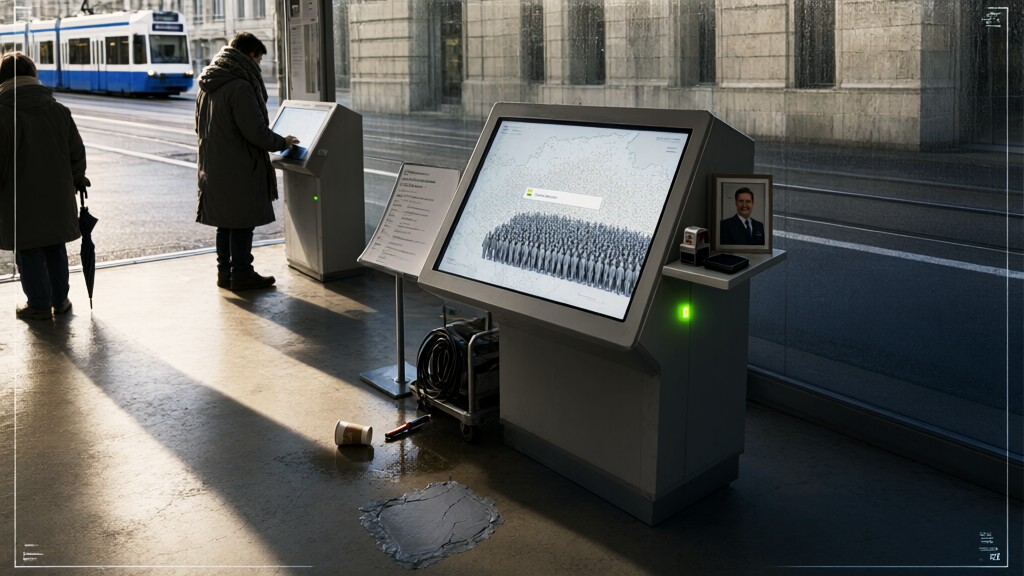
ZURICH. The media concern 20 Minuten has deployed a digital instrument. The user submits a surname. The machine returns a count of identical surnames within the Swiss population and a map of their coordinates. The interface labels the procedure a "Check".
The mechanism is a census performed by the census subjects. A query for "Müller" produces a crowd. A query for "Rottmann" produces a smaller gathering. The system identifies the regions with the highest density of name-bearers and invites the user to locate their herd. Directions are supplied. Pasture is not. "I wanted to know if I was rare," said Jonas Castro, a resident of Bern. "I discovered I am a distribution pattern." A strategist for the portal, Deputy Undersecretary for Audience Metrics, explained the utility: "It confirms they are not alone. It is a mirror that counts the reflections."
The declared function is self-discovery. The printed function is density mapping. The tool does not ask what the user does. It asks what the user is called. The promise of a singular identity was issued at 09:00. The delivery of a demographic statistic was logged at 09:01. The promise preceded the statistic by sixty seconds. The distance between briefing and event is one keystroke.
The launch generated a waiting list: a queue of locals waiting to learn how many locals are waiting. "I queued twenty minutes," reported one local, "to find out I am one of many who would queue again." Proponents argue the tool fosters connection by mapping where the herd grazes. The numbers are precise. The sentiment is gratitude.
The Check closes where it opened: a surname goes in, a headcount comes out, and the species returns to work comforted, having verified the one thing it needed verified — that everyone else also ran the Check. Declared: unique. Measured: herd density. Discrepancy: none. Mood: fine, statistically.