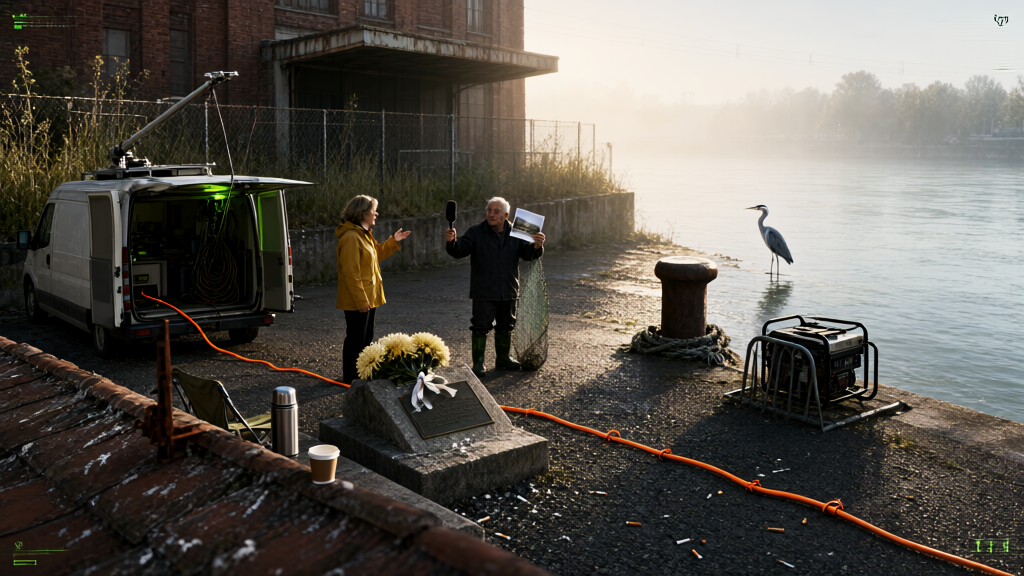
Forty years ago this week, a Sandoz warehouse near Basel burned, and the water used to fight the fire carried roughly thirty tonnes of agricultural chemicals into the Rhine. Fish and eels died along hundreds of kilometres. Cathy Flaviano, then a young radio reporter, described the burning warehouse live on air; this week the national broadcaster marked her account as the fortieth annual notice of receipt, which is the local term for grief with a renewal date.
The mechanism deserves the species' attention. The remedy and the poison shared a single pipeline: municipal crews poured water onto the blaze, the runoff dissolved the stored pesticides, and the solution travelled downstream with civic efficiency. The damage arrived by way of the rescue, which is why no party disputes responsibility for the plumbing. The fire was sudden; the settlement was prompt. Sandoz compensated claimants within months and funded ecological restoration along the affected stretch — a restoration, note the auditors' phrasing, measured in kilometres of river and payable to everyone standing next to it.
A retired claims administrator involved in the payouts summarized the philosophy with the serenity of a completed form: "We reviewed several hundred files and paid every legitimate claim. The river never filed one. We checked."
The outstanding balance, itemized: firefighting water, donated by the municipality to both parties; warehouses, rebuilt at insured cost; farmers, reimbursed for contaminated vineyards and lost livestock; anniversary coverage, budgeted annually, airing on schedule, 40 installments and counting; the Rhine, paid in full every year by being the Rhine.
Our own delegation learned this pricing model when we finally discovered weather: until the storms received invoices, we assumed they were decoration. The locals have not made the same error. They know exactly what the river is worth. That is why it appears nowhere in the books — an asset that valuable is kept off the ledger, where it cannot be spent.
The ledger, forty years on, balances precisely, down to the last franc of the last claimant. It balances because the fire was successfully put out. The water, having finished the job, simply stayed in the river. Nothing further was owed.