President Xi Jinping told visiting officials this week that the Middle East should not become a battleground for great-power rivalry, and that the region's future must be decided by its own peoples. State media carried the remarks as a message of partnership. The region's harbors received the same message years earlier, in the form of operating contracts.
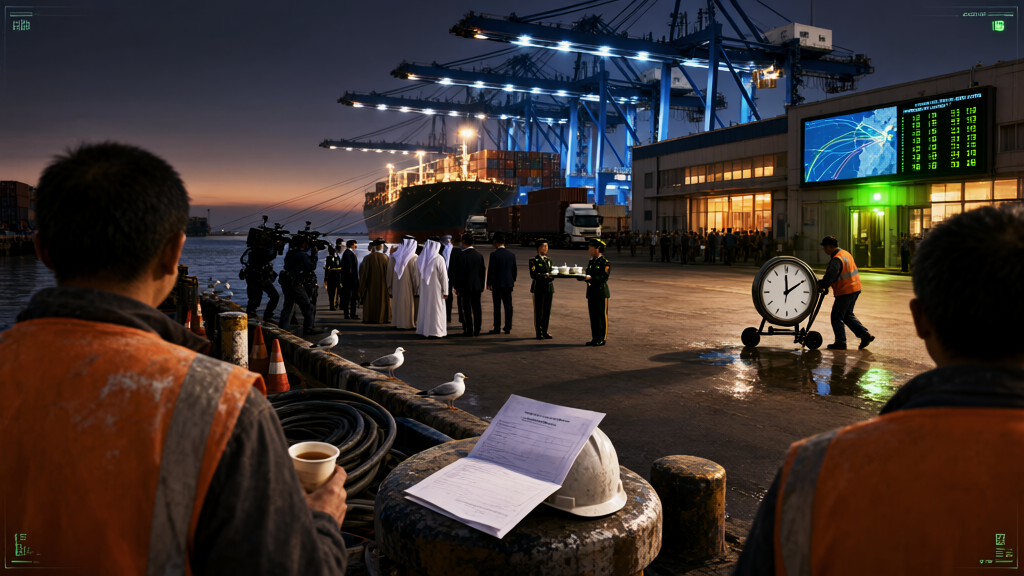
Shanghai International Port Group operates the new container terminal at Haifa, Israel's principal cargo gateway. COSCO Shipping Ports, a state-controlled operator, runs a terminal at Khalifa Port near Abu Dhabi. The vessels calling there fly flags of convenience, but the concession agreements name the beneficiary with unusual clarity.
The mechanism is standard local practice called foreign direct investment: one power funds the infrastructure, accepts long leases, and acquires the right to call its own presence commerce while calling its rivals' presence influence. A shipping consultant in Rotterdam, Marten Vogel, summarized the doctrine: "Whichever nation unloads the containers decides which nations get unloaded. We prefer the word 'logistics.'"
The arithmetic of the gap can be stated precisely. Declared: the Middle East must resist entanglement with external powers. Printed: sixteen consecutive years of Chinese port concessions, rail financing, and energy purchases across the same region. Measured along the local instrument of record, the press release, the statement followed the docks by approximately one decade — meaning the caution against arrival was issued from premises that had already arranged reception for it.
A retired diplomat in Amman, Fares Odeh, defended the arrangement: "Great-power rivalry is harmful, yes. Rivalry requires rivals, and we found it cheaper to select the rival in advance. The lease was signed before the lecture; we consider that tidier."
This bureau logs the pattern under its local filing term, "non-interference": the announcement files first, the interference arrives later, correctly dated, and the region's future is indeed being decided by its own peoples — at forty-ton increments, on schedules posted in advance. The docks did not respond.