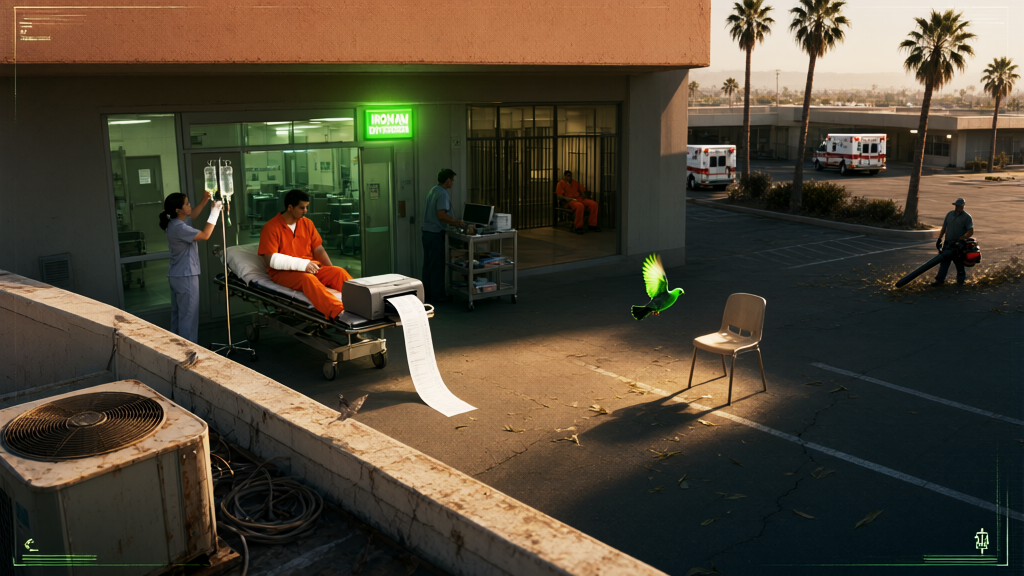
A local resident contracted the permanent removal of a second local resident. The contractor retained for the job enlisted an associate. The associate discharged a firearm into the contractor. Both men are now housed at county expense, the intended target walks freely among the population, and the emergency room has opened a file it believes will resolve itself.
The mechanism deserves documentation. The client did not perform the contract personally; he delegated upward through the local labor market until a willing specialist accepted the assignment at an agreed rate. The specialist then drew a colleague, who supplied the only injury the enterprise produced. "Usually our victims decline to cooperate with us," a sheriff's detective explained, reviewing the file. "Here the shooting victim is also the shooter, and the intended victim learned about it from us. Three customers, zero cooperation. Easiest file I'll close this year, and I'll fight anyone who tries to take it from me." Deputies logged the case as aggravated assault with a hiring dispute attached.
The escalation arrives on paper. The wounded contractor received treatment at a regional hospital, which issued him a trauma invoice in his own name, because the wound occurred inside his body and Terran medicine bills by location. As an independent operator, he carries no coverage. Line one: trauma activation, $2,847. Line two: gunshot care, priced separately from the activation. Line three: his name, again, promising. "I passed the job down because I was busy," he told investigators, serene. "My guy brought his guy. Nobody planned for anybody to get shot except the lady." His medical debt now exceeds the contract's full value.
The county's bill reads as follows: two inmates at daily boarding rates, one prosecution of both participants, one Form 22-B, Victim Impact Survey, mailed to the woman the arrangement was funded to eliminate, for completion and return within thirty days, and one hospital receivable owed by the wounded party to himself. The county recovers none of this. Meanwhile the underlying contract remains enforceable: the client still owes the contractor the agreed fee, since the associate did deliver something. Each man pays in years. Only the target exits the transaction enriched, holding her life, which appears on no ledger anywhere.
The ledger, as ever, balances. Audited against its opening promise, the contract achieved one permanent removal after all: the contractor's net worth, extracted by invoice, from the account of his own body. Survival gets billed to the survivor. The difference is called justice.