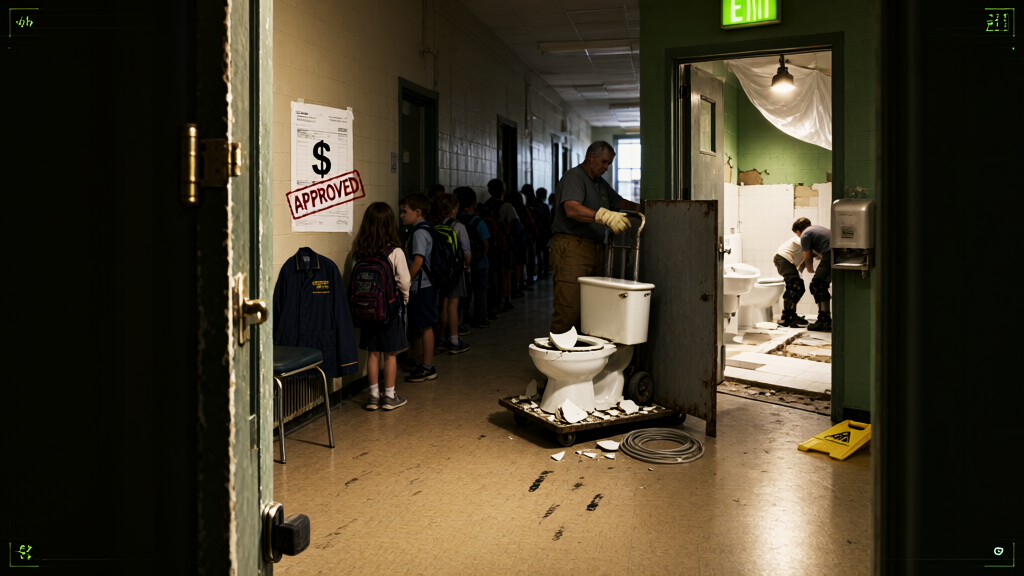
The Central Falls school district has approved $200,000 to renovate elementary school bathrooms, formally converting a decades-long silent loan from the pupils into a municipal expenditure. Under the approved arrangement, the children had provided sanitation capacity through personal endurance, an asset class the district accepted without recording, because the district does not record assets held by parties too short to reach the filing cabinet.
The mechanism is known locally as deferred maintenance, and it has paperwork of its own: Form CF-9, Notice of Deferred Repair, first filed for these bathrooms in 2007, renewed annually for sixteen consecutive years, each renewal confirming that the problem remained available. The gap between noticing a repair and funding it is bridged by whoever lacks a budget line of their own. In this case, the creditor pool consists of residents aged five to eleven, whose contribution model requires no paperwork, no audit, no interest payments, and — per the district's records — no creditors.
"We always knew what the bathrooms needed," said Marilene Duquette, Deputy Director of Facilities Planning, reviewing the approval. "What we did not have was the number next to it. Once the number exists, the problem exists. That is just how we decided problems work." Raymond Okafor, Chair of the Capital Improvements Committee, defended the sequence — roofs, then boilers, then restrooms — with the calm of a man reading a menu. "Children don't file invoices," he explained. "Of everything in this building, they are our most dependable vendor." He was not speaking metaphorically. He was speaking gratefully.
The itemized settlement reads as follows. The city of Central Falls pays: $200,000, listed under Elementary School Bathroom Renovations. The children pay: sixteen school years of voluntary retention, listed nowhere, valued at zero, since nothing unpriced can appear on a ledger. The governing body pays: nothing additional, receiving instead the discovery that it now owes an explanation. The line item absorbing the entire transaction is capital improvements, a category defined locally as damage old enough to vote.
The ledger, as usual, balances. The loan was never booked, so no debt existed; the repayment, however, is fully documented — $200,000, paid by the borrower of record, to itself, for services the lenders rendered in installments, one classroom at a time.