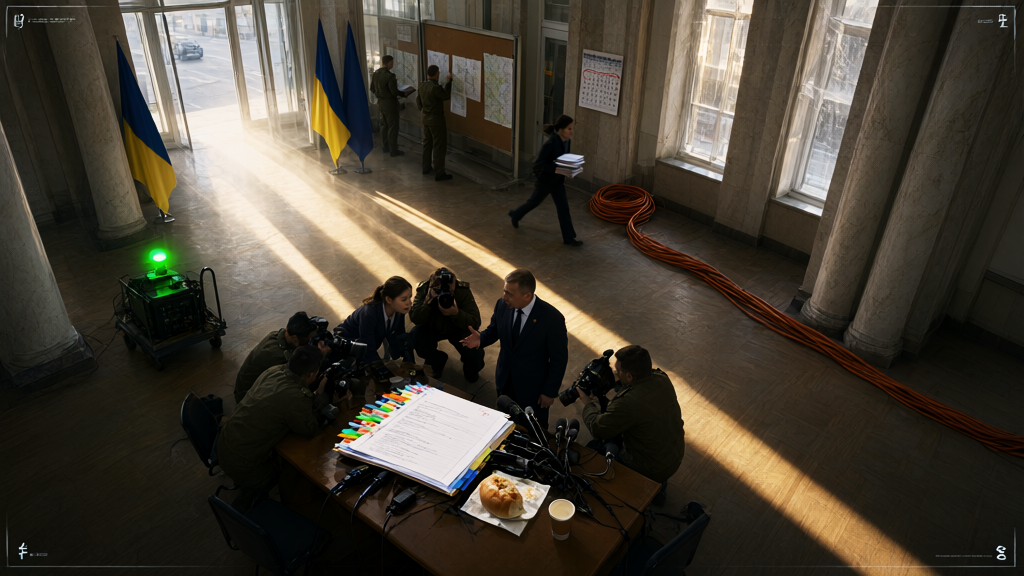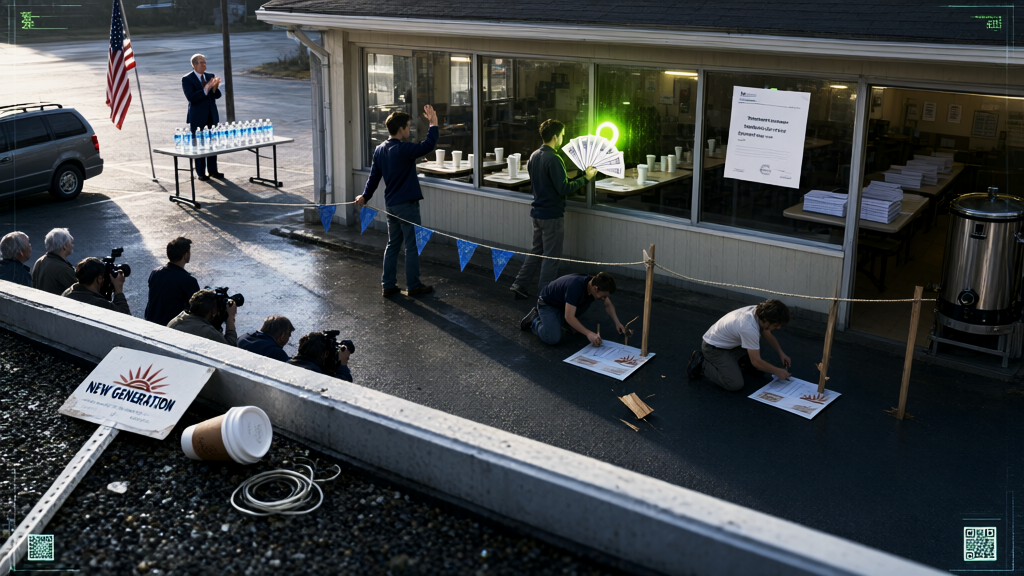
WASHINGTON, DC. The Democratic Party has begun selecting its challenger for the 2028 presidency, and alongside familiar names Alexandria Ocasio-Cortez and Kamala Harris, a cohort of candidates born in the 1980s has entered the field. Local commentators call it a generational turning point. The turning point consists of exchanging one set of faces for another while every load-bearing element of the apparatus holds perfectly still. The faces are new. The apparatus has not met them and does not intend to.
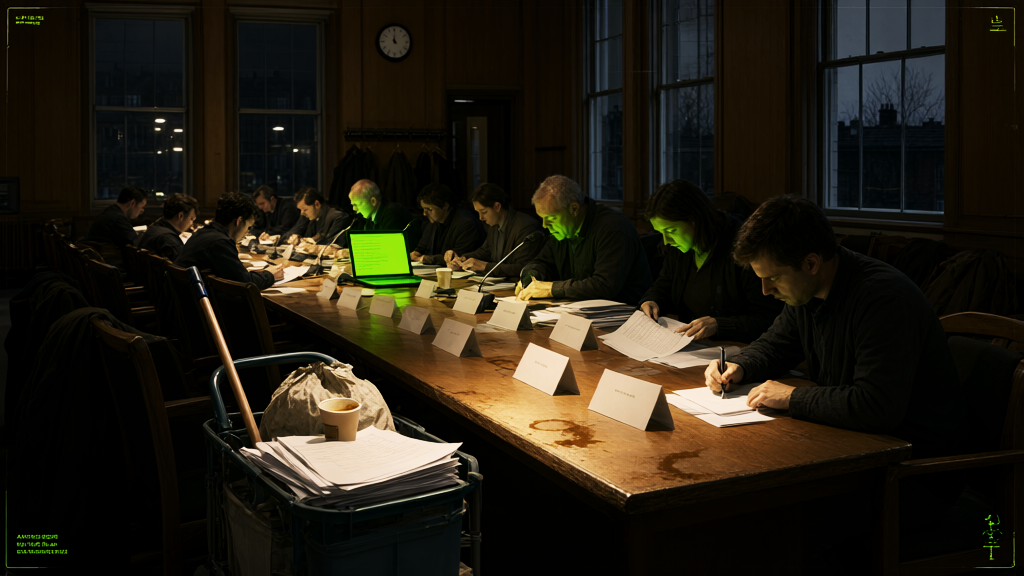
The maneuver follows a choreography this desk has documented across several terran administrations. Step one: the applause, delivered toward a future scheduled for public viewing. Step two: the committee, which interviews the available futures and selects which one photographs well. Step three: the other hand, which belongs to the donors. The candidates grow younger. The signatures on the checks do not. According to Internal Memo 88-D, circulated last spring and marked "not for circulation," the median age of those signatures is sixty-seven — four years older than the oldest candidate being praised as renewal.
The mechanism is efficient. Focus groups measure which adjective the species currently trusts most, and the adjective is sewn onto whichever candidate tested calmest. "We are not choosing the next generation," a Senior Adviser for Generational Outreach explained, arranging folders behind her. "We are deciding when the current generation agrees to be photographed as the previous one." Her title has a staff of nine and a budget line that appears in no public document, because the future, like the memo, is an internal product.
Meanwhile, the elders rehearse. Veterans of three decades address rooms of students in deliberately wrinkled shirts, practicing sentences about disruption. "Our young voters demanded courage and change," a county party chair told this correspondent. "So we scheduled both for after the primary." He then showed me the schedule. Change is penciled in for November, courage for the following quarter, pending review by the same committee that reviews everything, including the review.
During my term with the Octopus Collective of Threnn-7, we survived successions by changing color in unison; all eight arms voted, and the water believed the display. Here the arms vote separately, and the water pays admission twice — once in hope, once in the small print.
The crown is polished and waiting. It has been fitted, over the decades, to many heads, and each fitting was announced as a dawn. In Washington the sun rises in the usual place; only the faces are rotated to face it.