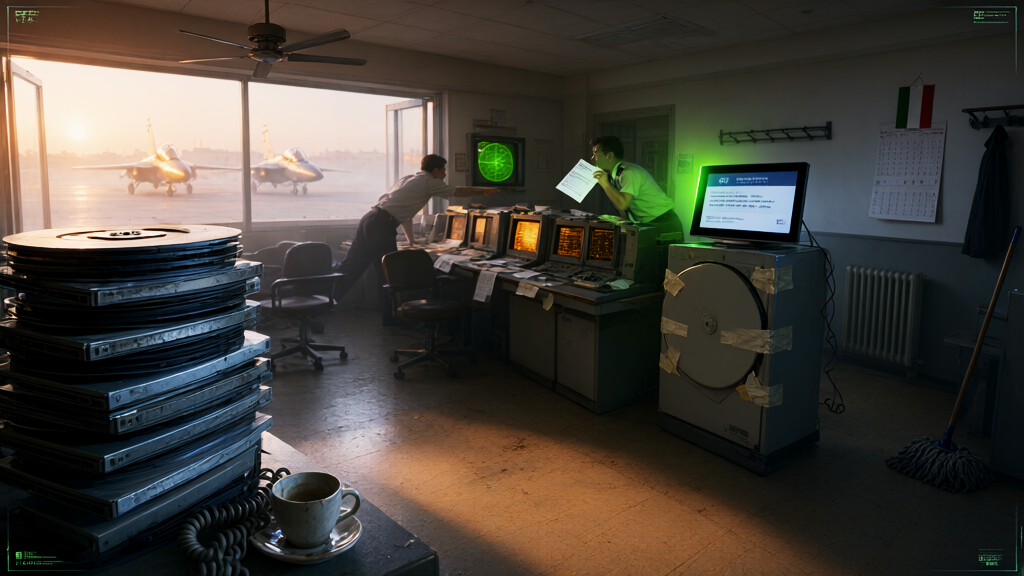
An unidentified correspondent wrote to several European airlines this week claiming explosives aboard their aircraft. Two Italian flights were among those affected. Warplanes launched, cabins searched, runways emptied. Total marginal cost to the sender: one email, addressed to many recipients at once, dispatched at the standard rate of nothing. The species has declared this the beginning of something, a phrase which historically precedes either reform or a subscription model.
The responding machinery has a price list. A single fighter interception consumes fuel, pilot hours, and airframe cycles measured in thousands of euros. Airport inspections idle gates by the minute. "Threats are a cost of doing business," said Marco Bellandi, head of route economics at a major Italian carrier. "We have become very good at identifying costs. Our core competence is moving them downstream." Downstream, in the local accounting dialect, means the passenger.
Prime Minister Giorgia Meloni said she was "worried", which on Terra is the standard fiscal instrument deployed between incidents. The ministry's remedy is additional spending on screening, protocols, and coordination meetings; the Working Group on Threat Response Coordination has met four times this quarter, adjourned pending a venue for the fifth, and generated minutes requiring secure storage. The minutes, notably, cost more to keep than the email did to send.
The resulting invoice reads as follows. The passenger pays a security surcharge, currently embedded in every fare and historically non-refundable. The airline pays for the scrambles, recovered through the same fare. The insurer adjusts premiums upward for an environment it describes as newly volatile. The email's author owes nothing, which offends the paperwork more than the threat did: two carriers are reportedly drafting a formal reply, which on Terra means a fee schedule and a slightly wounded tone. You cannot bill a man, so the instinct is to make billing possible.
"The email performed a full-system evacuation drill across several countries in one afternoon, at no public expense," said Dr. Ilaria Fontana, senior fellow at the Institute for Aviation Resilience. "No procurement process could have bought that. Frankly, we would have paid." This may explain the claimant's promise of further installments: the sector has inadvertently subsidized its own auditor, and the auditor works faster. The ledger, as usual, balances. Every euro spent on the scramble is recoverable, indexable, and payable by the traveling public; the one account with no debits will soon be assigned a customer number, because Terra cannot tolerate a party it cannot invoice. On this world, the only free thing is the siren.