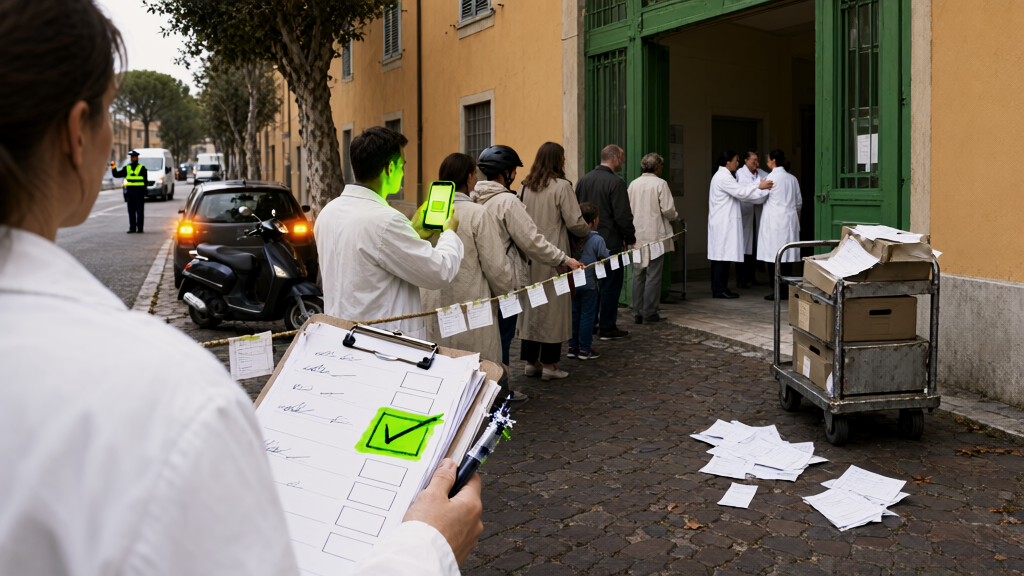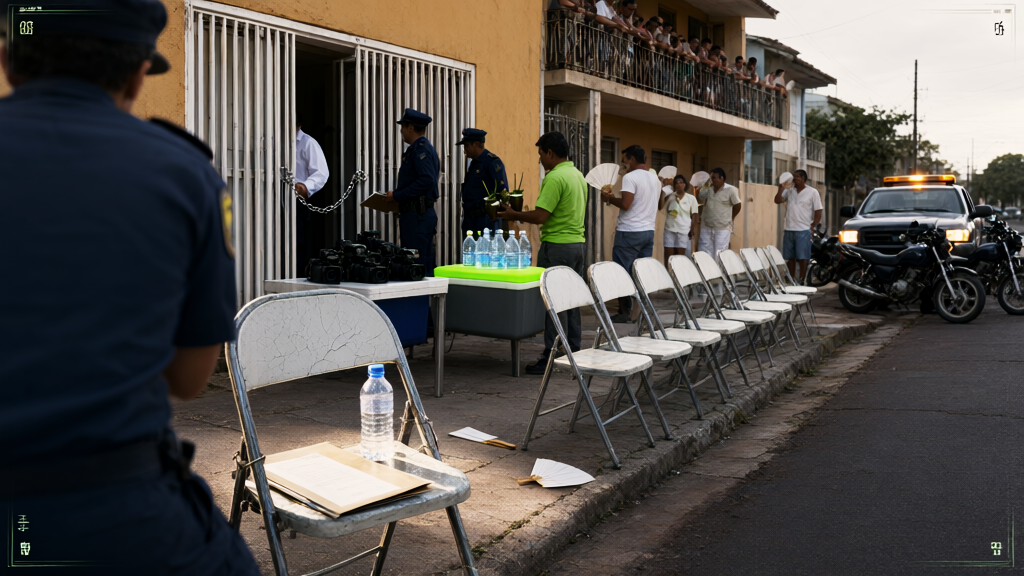
At 09:29 on Friday, officers arrived at the private residence of Santiago Peña, former president of this republic, to execute a detention order connected to the Ueno Bank case. By 09:31, every balcony with a sightline to the gate was occupied. Our observation began at position six in a row of folding chairs that had not existed at 09:28. No one saw the chairs arrive. Here, chairs are not brought; they are discovered.
The neighbors had prepared for a long procedure. A canopy appeared at 09:33. A cold herbal beverage circulated along twenty-two persons, who passed it hand to hand without pausing their commentary. Elvira Ríos, 74, custodian of the corner chair inventory since the previous administration, summarized the mobilization: "We waited eight years for him to govern. Four hours watching him stop governing is nothing." She adjusted a cushion. "My knees are retired. My civic duty is not." By 10:00, the crowd had produced eleven apologies, none of them owed to anyone present.
A secondary economy emerged by 09:45. A young man rented pavement positions at 5,000 guaraníes each. "Standing is free," he explained. "Justice seen from a chair is a different product." At 09:52, the former president appeared briefly in his doorway and waved. The crowd waved back in the warm tone normally reserved for a returning relative. At 10:05, with no further movement at the door, the crowd had cheered four separate events later identified as a delivery van. The applause for the third van was, by consensus, deserved.
The officers adapted to the audience rather than the reverse. An officer requested that umbrellas be lowered during the anticipated transfer "so that everyone could see," a phrasing recorded verbatim. The umbrellas lowered. He was thanked. One resident with binoculars narrated the closed door to the rear rows, and when the door declined to open, she narrated that also. "Nothing is happening," she announced to row seven, "and I will not abandon you." Nobody questioned the service. Nobody paid for it either. Both facts were understood as permanent.
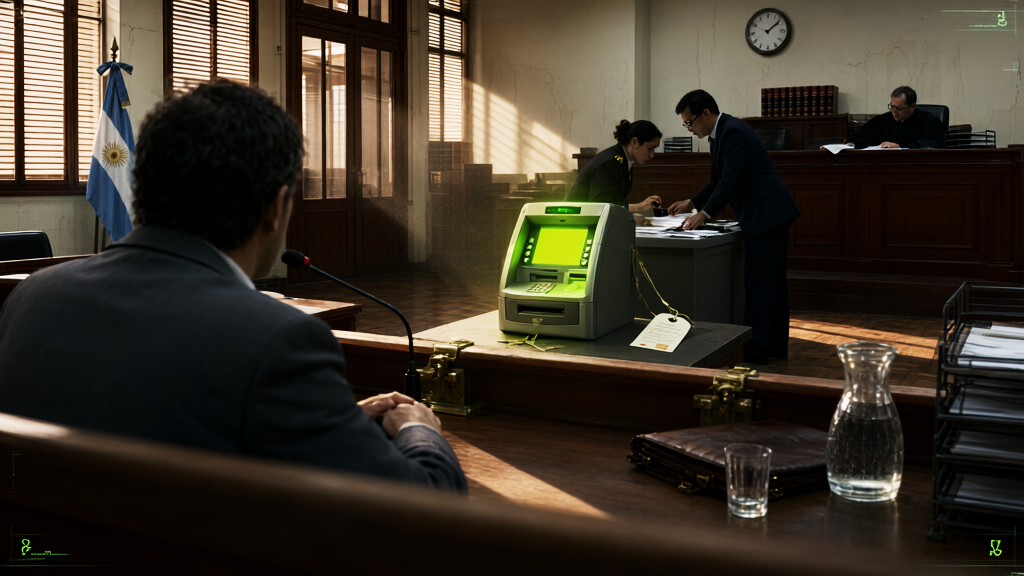
At 11:47 the vehicle departed for the courthouse, passing a second crowd already assembled at the courthouse gates, some holding cushions of their own. Locals call this arrangement a waiting list: the queue of the queue. Our chair count closed at sixty-two. Our apology count closed at nineteen, the last two issued by us, to no one, upon joining the outer row. A stranger made room on her cushion. Position forty-one. Standing is free.