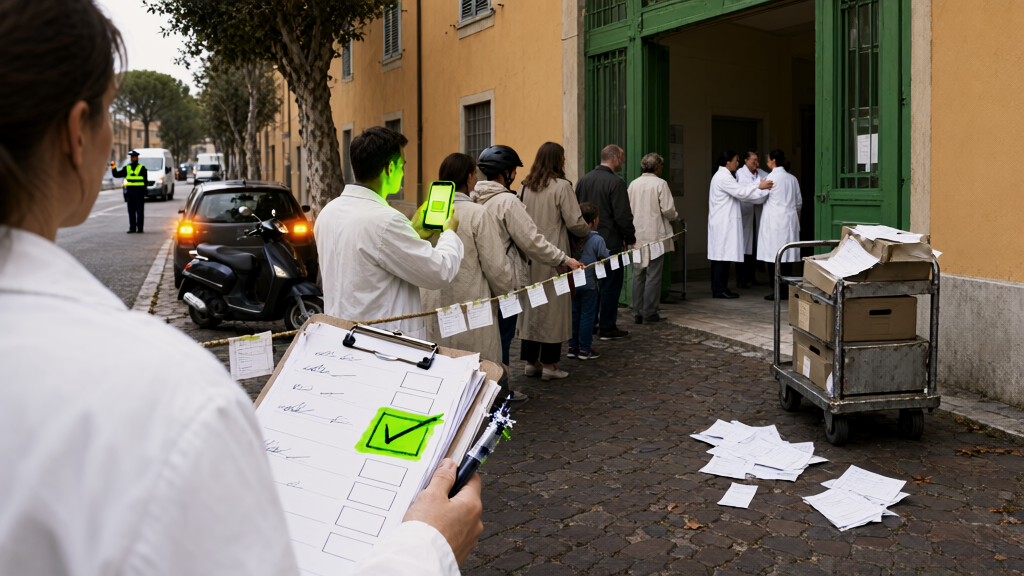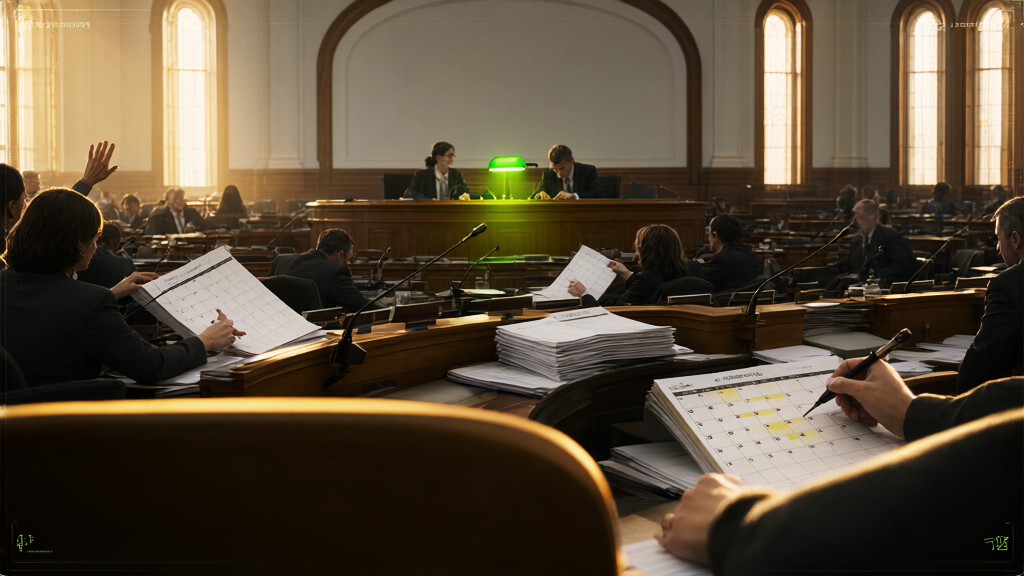
Item three concerns the American state of Wisconsin, which has scheduled a meeting of its Joint Finance Committee for Tuesday. The purpose of the transition budget session is to determine when the committee will hold sessions. The species has separated the act of governing from the act of scheduling governing, and assigned the latter to a body normally reserved for the former.
The mechanism merits documentation. A committee exists to allocate funds. Before allocating funds, it must meet. Before meeting, it must decide when meetings occur, which requires a meeting. At no point in this recursion does money move — zero dollars so far this fiscal year, a figure this desk verified twice out of professional envy — a condition the committee regards not as failure but as progress through a pipeline whose other stages remain undisclosed. The state has also, per its own filings, begun maintaining a waiting list of items awaiting the meeting that decides whether the meeting happens.
"This is how we get everyone in the room," said Gerald Husak, identified as a legislative aide, when asked what the meeting would produce. "The room part comes later." Pressed on the distinction, he clarified, serenely: "Tuesday is about whether Tuesday works." Asked what happens if it doesn't, he said the quiet part without being pushed: "Then we schedule a Wednesday about it."
New consequence, since the recursion itself is now documented: the arrangement is self-funding. A committee convened about convening costs the state nothing while assembling, making assembly the cheapest known substitute for action — roughly nine months of calendar consumed, by our bureau's count, per dollar spent on outcomes. Locals defend the sequencing on the grounds that a body which cannot yet meet should not pretend to govern, and from inside the chamber this is airtight. From outside, the state has built a machine that manufactures preconditions and installed it between itself and its declared objective, then elected the machine's operators to oversee it.
Finding four: the species schedules deliberation about deliberation, grades it as movement, and adjourns satisfied. Recurrence risk: total; the procedure has been adopted by every legislature studied to date. Remediation: this desk recommends the committee complete its review of its calendar within one fiscal quarter, or two, whichever produces fewer meetings. Our bureau, reorganised six times last cycle with no measurable output change, files this suggestion under continued optimisation. Coverage of the meeting about the meeting will continue until the committee meets to discuss coverage.