The seat is not vacant, but the race for it is fully staffed. Guy Parmelin, the Federal Councillor from Vaud, is stepping down, and under the arrangement this confederation calls the magic formula, his chair transfers automatically to the Swiss People's Party, whoever that turns out to be. Thomas Aeschi, a National Councillor from this canton, is rated the party's leading claimant. He therefore spends the autumn touring the country to persuade colleagues of the single fact the allocation table settled decades before his birth: that he, personally, is the number. His colleagues, for their part, spend the autumn being persuaded. Everyone reports finding the process suspenseful, which is the confederate word for arithmetic performed slowly.
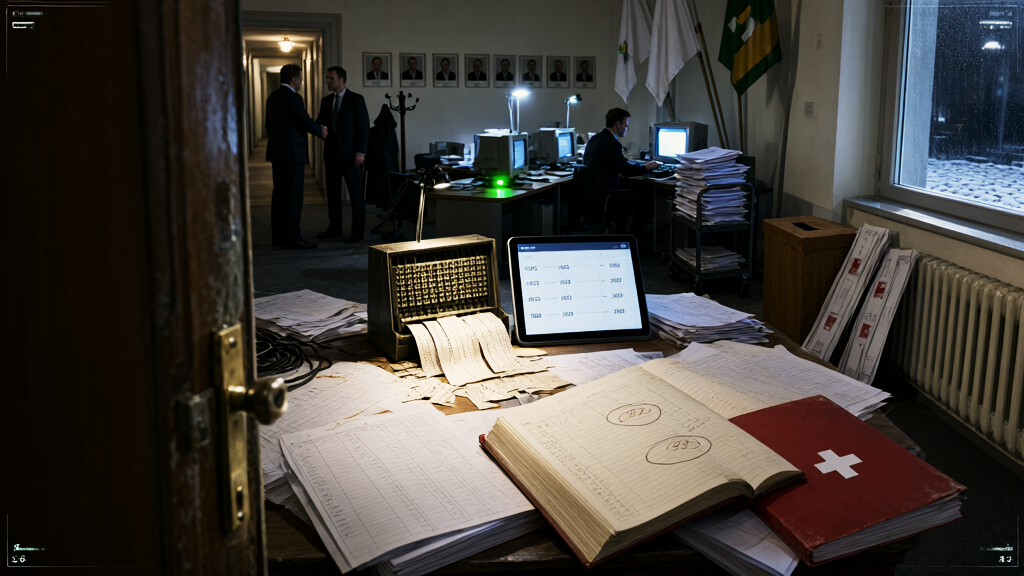
The mechanism deserves description. Since 1959 the seven-member executive has been distributed among parties by a formula revised only when its output becomes embarrassing. Parliament holds the formal vote. The parties hold the substantive one, earlier, indoors. What remains public is the ceremony of doubt: listening sessions, congresses, denials delivered in the key of fresh discovery. Smaller parties maintain what locals call a waiting list, in case the formula one day rotates toward them, which it has done for the smaller parties roughly as often as a Ferris wheel changes its mind mid-turn.
Hanspeter Gasser, a delegate from Thurgau who has attended six successions, described the economics unprompted: "Of course the seat was never open. We are choosing which face it wears, and the faces pay for the fitting." A fundraising consultant active in several campaigns went further: "Donors understand completely. They are not buying the outcome. They are buying proximity to the outcome." She then invoiced this correspondent a consultation fee for the observation, which is the most honest transaction in Swiss politics.
The itemized account, as this desk renders it: candidacy, declared, price zero. Persuasion tour across the cantons, fuel, halls and catering, borne by the aspirant's network. Salary attached to the office upon victory, payable by taxpayers, roughly 458,000 francs per year. Donor contributions, logged as support for open democratic competition, a category containing one open item, the seat, closed since 1959. Belief that the result was ever uncertain: supplied free, in unlimited volume, by everyone involved. The absurdity files itself under the last line, entered here as seat retention, arithmetic, one unit.
When the United Federal Assembly votes in December, every franc will have been spent proving an equation solved before the first poster dried. The dignity of the office appears nowhere on the invoice; this desk initially assumed unpriced meant absent, and has learned it means prepaid. The ledger, as usual, balances. The question is why the electorate keeps renting a seat that was sold furnished.