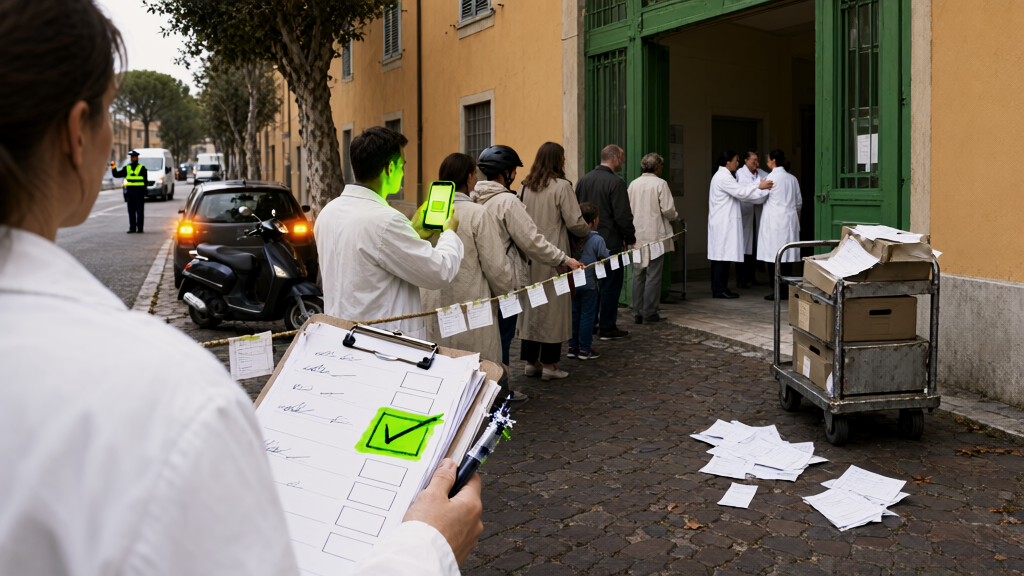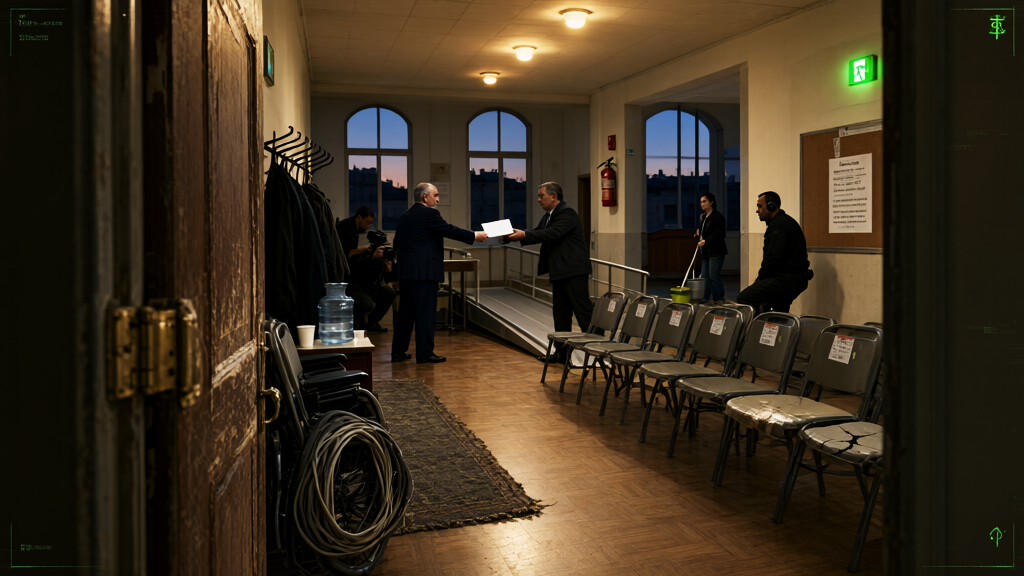
At minute four of the presidential residence ceremony, our observation began. The head of state, Isaac Herzog, placed a sealed envelope in the hands of Gadi Eisenkot, leader of the parliamentary opposition, an act that by custom transfers to him the obligation to assemble a government within twenty-eight days. Democracy was not measured, weighed, or examined. It was assigned homework. At minute nine, the corridor outside produced its first apology.
By minute nineteen the corridor had yielded eleven handshakes, six uses of the word "honour," and one coffee declined, re-offered, and accepted on the third pass, which appears to be the legal minimum. Nobody present behaved as though the survival of the state now rested on persuading sixty-one of one hundred and twenty legislators to stand near each other in public. At minute twenty-six the corridor produced its fourth apology, this one for the condition of the corridor.
The mechanism bears recording. The species appoints one member of the troop to count the others' promises. Enough promises, government occurs. Too few, the promises are returned to the voters, who issue fresh ones, at a cost the species pays without complaint because the alternative is writing it down. A second queue therefore exists behind the visible one: a waiting room of almost-governments, humming politely. By minute thirty-three the sixth apology had been logged, this one from a man who was not involved.
A retired clerk watching from the gate, who gave her name as Yael, summarized the arrangement: "If he can't get the numbers, we vote again. Eventually somebody promises harder." An adviser walking beside Mr. Eisenkot told our observer, with the calm of a man reading weather: "Twenty-eight days is plenty. Democracy works best under deadline. It's how we keep it honest." Both statements were offered as reassurance. Both function as confession. The steelman holds: the counting is public, every promise is checkable afterward, and the machine does exactly what it was built to do. That is the alarming part.
At minute forty-one, Mr. Eisenkot departed with the envelope in his left hand — the right reserved, presumably, for promising — warning of a point of no return. Officials confirmed the envelope's contents: blank. The twenty-eight days arrive unfilled; the government must supply its own reasons. Our tally closed at eight apologies, one envelope, zero answers. The homework is blank. The deadline is not.