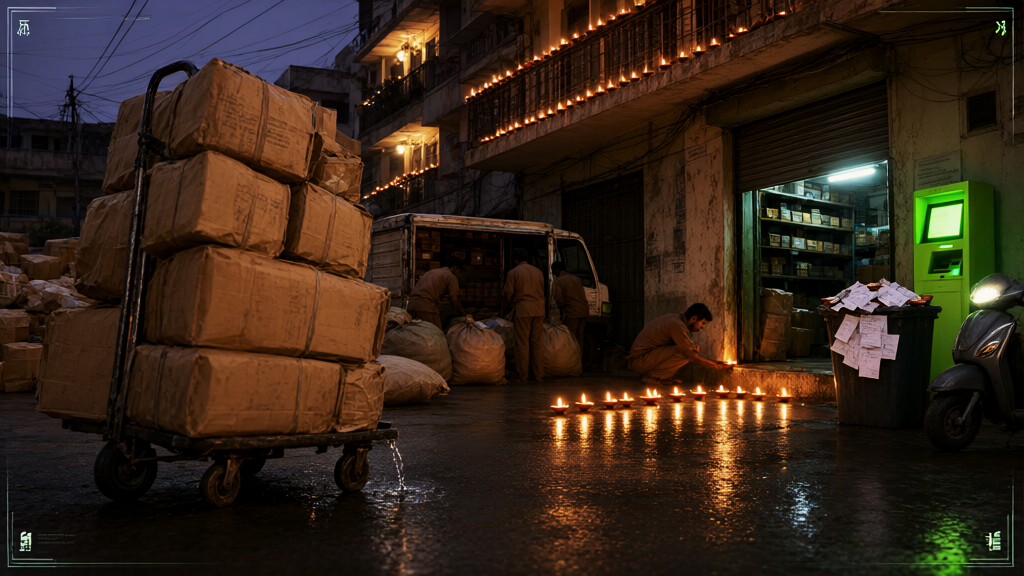
Item four concerns the luminance ceremony observed here, locally designated Diwali, one of the largest festivals in the Hindu calendar, marked with prayers, lamps and fireworks. The declared purpose of the ceremony is light. The principal outcome measured by local authorities afterward is how much particulate matter residents inhaled while producing it. This desk notes that the species has begun issuing the grade before the event, allowing citizens to schedule their breathing around it.
The mechanism deserves documentation. A government body maintains a numerical index of air suitability, and during the festival this number is expected to deteriorate, so officials announce in advance which category of deterioration the public should anticipate. Last cycle the forecast peaked at 391, a figure officials classified as "very poor," a category beneath "poor" and above whatever comes after surrender. Schools received advisory circulars recommending that children remain indoors, which this desk notes is also the traditional recommendation for chemical events and one flood. A Deputy Advisor for Atmospheric Tolerance told this desk: "We ask people to celebrate responsibly. Celebration and respiration compete for the same evening, and we have adjusted our communications accordingly."
The escalation follows a familiar pattern among the species. First the celebration incurs a cost, measured in visibility. Then the cost acquires an audience, as national broadcasts report the smoke figure beside the prayers. Then roles reverse: residents thank officials for restricting the fireworks to certain hours, and officials accept the gratitude as though breath were a concession granted rather than a condition inherited. A retired schoolteacher queuing at a lamp stall summarized the arrangement: "The air is bad every year now. We buy the lamps anyway. What else do they want from us?" No official answer has been recorded. Meanwhile the festival economy has absorbed the finding entirely; air purifiers are now exchanged as gifts between relatives, several days before the lamps, so that the household may be seen celebrating and surviving in matching sets.
Recurrence risk is rated high, as the event is calendared indefinitely and the remediation committee, formed after last cycle, reports that it requires further study of last cycle. Its findings are due shortly before the conditions requiring them recur.
This desk assigns the ceremony a satisfactory grade: the species successfully celebrated illumination, purchased its own mitigation as merchandise, and scheduled both again for next year. Coverage will continue until the air improves.