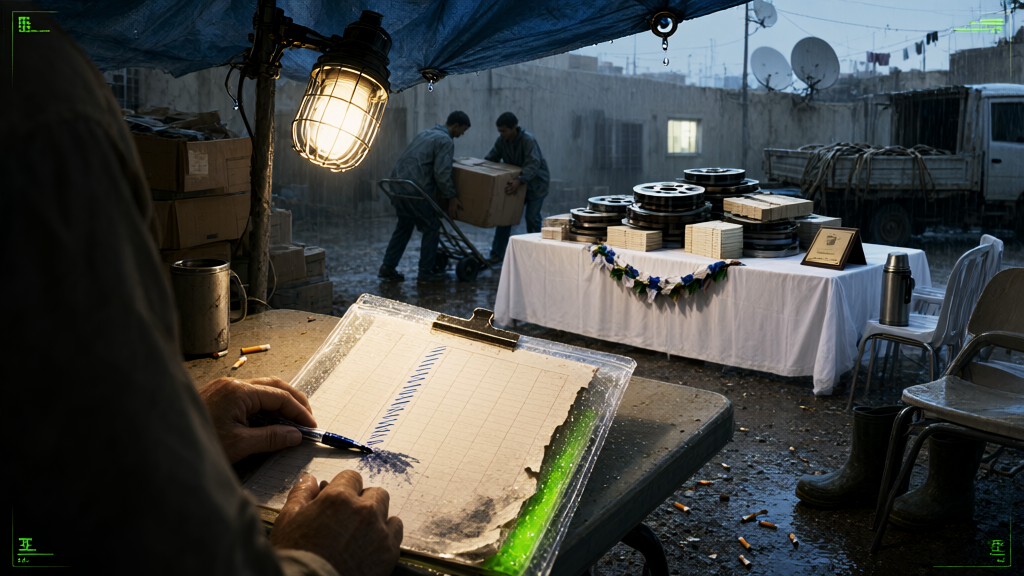
GAZA CITY, GAZA. At minute four of our observation, a tent became a pond with occupants. Heavy rains have swept the displacement camps this week, submerging makeshift shelters entirely, and more than three years into the war the residents remain where the war left them: outside, in November. Our tally opened at dawn. By the ninth hour, 41 separate emergency declarations for a single camp sector had produced one tarpaulin, distributed.
The mechanism rewards patience. A declaration summons an assessment team, which schedules a visit, which requires a route approval, which waits behind the waiting list of the waiting list. "We declared an emergency last winter, and the winter before," an aid coordinator responsible for Seasonal Response Continuity told us, straightening her lanyard over a dry jacket. "It is all documented. That is why we document." She confirmed the documentation itself has never absorbed water. Running tally at midday: 41 declarations, one tarpaulin, zero tents dried.
Beside the flooded latrines, a man who gave his name as Abu Saleh was raising his tent floor onto crates for the fourth time this season. "Each year they come, they photograph the water, they leave before the water does," he said, arranging the crates by height. He asked for nothing during our forty-minute interview except help lifting the fourth crate, which we provided. The photographs, he noted, are also stored somewhere dry.
The escalation came at the coordination point, where an official from a provincial donor delegation explained, with genuine warmth, that this winter's rainfall had been classified a Level Two emergency, unlocking funding streams unavailable to mere Level Ones. "Forty-one declarations is actually a strong number," he said. "It shows the system is responding." He then offered us a leaflet explaining how residents may appeal the level of their emergency. It was laminated. Behind him, residents were bailing mud with cooking pots. The pots predate all levels.
Winter arrives next week, according to the seasonal calendar, which has never once required a declaration. We closed our tally at 17:40, when the count of drowned tents passed the count of declarations and kept moving. At minute four, a tent became a pond; by 17:40, the ponds had become the map. Everything here is documented. Nothing here is dry.