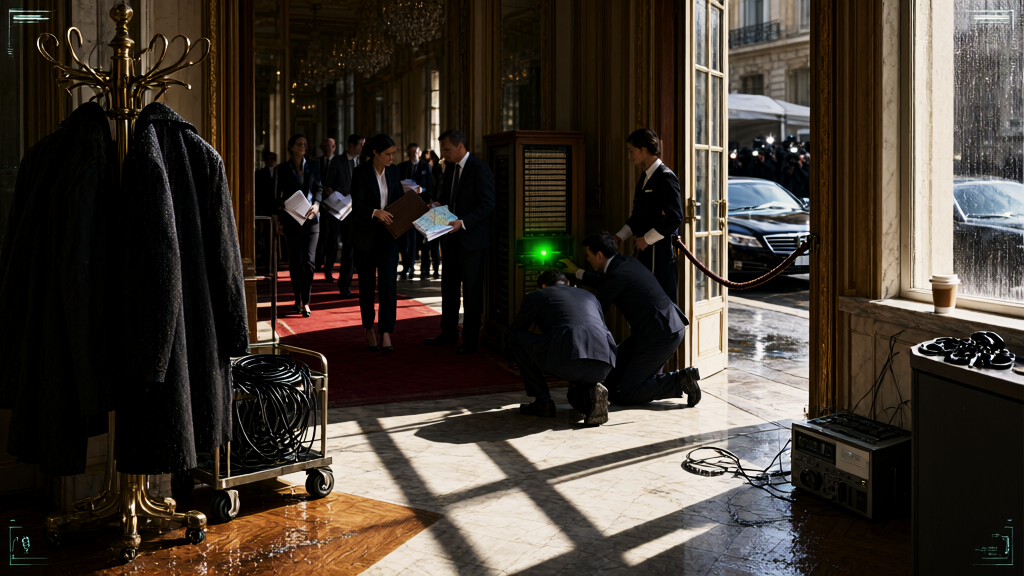
PARIS, FRANCE — The foreign ministers of the Group of Seven convene here Monday to decide the futures of two wars, and the wars have not been invited, which spares everyone the awkwardness of consulting them. Russia's war in Ukraine and the prospect of renewed American strikes on Iran top the agenda. The Ukrainians, the Russians and the Iranians appear on paper, in the way a patient appears on a chart: present, legible, and available for discussion in the third person.
Consider the mechanism as a demonstration. Step one: gather seven ministers whose populations elected none of the combatants. Step two: discuss the combatants at length, across two days, in rooms sized for exactly seven and no patients. Step three: issue a joint statement that changes no positions but confirms the positions were photographed together. Step four: watch the actual hand. The only actor holding new options is Washington, which has kept the possibility of fresh strikes on Iran open since the midterm elections cost the Republicans their majority — a scheduling detail now folded into the timing of a war, the way weather is folded into a picnic.
US Secretary of State Marco Rubio attends both days this time; in March he managed one, and the ministers have learned to calibrate hope against departure times. The absence is not oversight but doctrine. "We cannot seat the parties directly involved," a deputy sherpa attached to the French delegation told this correspondent, explaining why Kyiv and Tehran sent no one. "Once they are in the room, the discussion becomes about their countries." He offered this serenely, the way one explains gravity, then returned to drafting sovereignty language for a country not in the building. The mathematics holds: the fewer participants a conflict has, the more conclusions it can generate. A war with zero invited parties permits unlimited findings.
In my eight years with the Ninth Tentacle Collective, we settled territorial disputes by arm-wrestling — eight limbs, one neutral referee, and no communiqué unless an arm broke. Primitive, certainly. But the disputants were warm, present, and within reach.
My own senate once required every law to publish its motive in a public register. The register is now four floors deep and unreadable, which taught me that somewhere, someone intended that too. Step five, then: the audience applauds, the dove flies home to a capital nobody thought to summon, and the futures decided here are filed alongside the patient's chart — reviewed, optimistic, signed — while the wars continue making their own appointments. The peace, like everything valuable on this planet, is stored in a bank licensed to hold numbers instead.