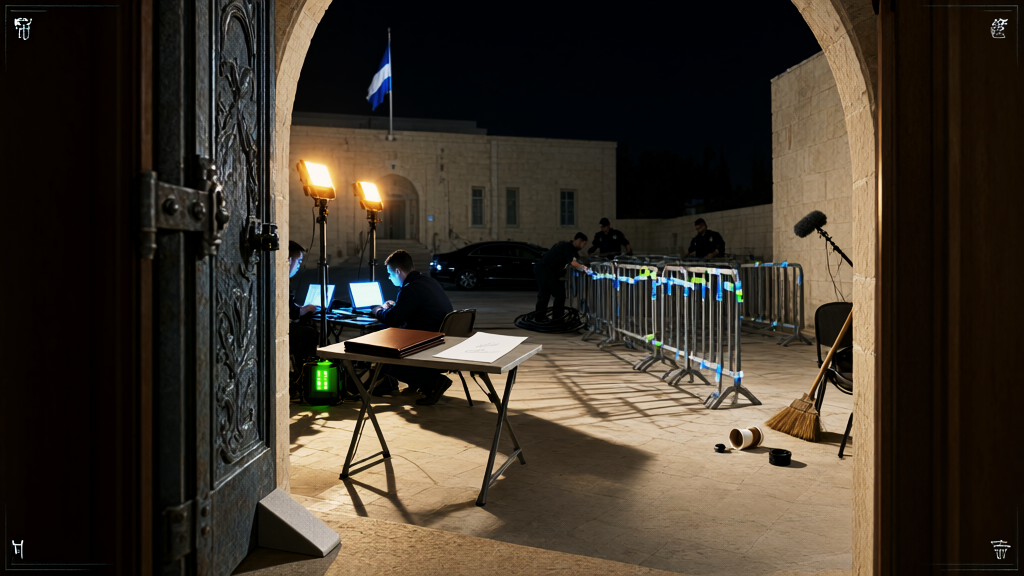
At position 14 in the queue of journalists outside the presidential residence, our observation began. Inside, Gideon Eisenkot, whose faction had placed among the winners of the recent national vote, arrived to collect the document that would make the winning true: a written mandate to form a government. Until the paper changed hands, the victory remained a hypothesis. "Israel can trust," Eisenkot told the assembled cameras, presenting trust as a draft awaiting signature.
The procedure rewards study. The species elects one assembly, then requires that assembly to assemble again, privately, into a majority of itself. Each party is a troop under its own dominant primate, and the primate with the most delegates must still purchase the smaller troops using future government posts. These posts sustain a secondary population, known locally as a "waiting list." One such official, waiting outside with us, described his status without bitterness: "This is my third government. I am furniture with a title."
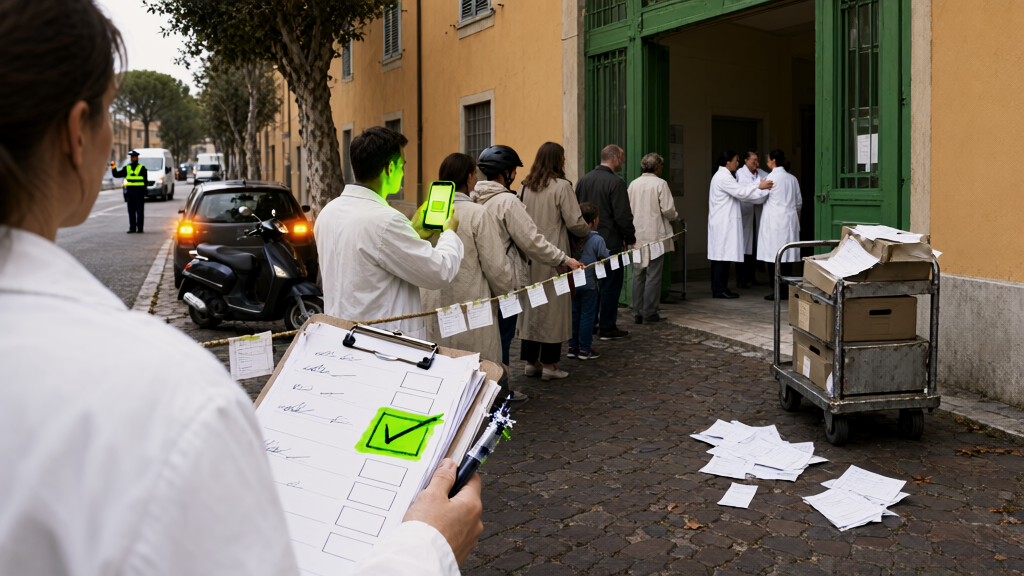
Our unit logged the pavement for forty minutes: eleven photographers, six statements about unity, two about responsibility, and, at minute nine, a party spokesperson thanking the electorate for a result he had already begun renegotiating. "We won decisively," he said, "which is why the next three weeks will determine whether we won." A bystander confirmed the arithmetic. "Twenty-eight days," she said. "Fourteen more if he shows progress. It isn't done until it's done, and then we begin the next one."
Local analysts defend the design with a straight face: direct election of a single ruler concentrates too much power, so the victor must instead obtain notarised approval from the very primates he defeated. The losing troops are not dismissed; they are retained, at salary, as a condition of victory. On our world a headcount settles everything, and no one has ever asked the counted whether they mind. Here the headcount is merely the application form.
At minute forty Eisenkot emerged holding the paper that converts votes into authority, and the queue applauded a man for successfully completing a queue of his own. The voters, having performed their portion of the procedure, dispersed to their natural state: waiting, at assorted positions, until the next time someone needs them counted. The vote, we now understand, is not the decision. It is the ticket number.