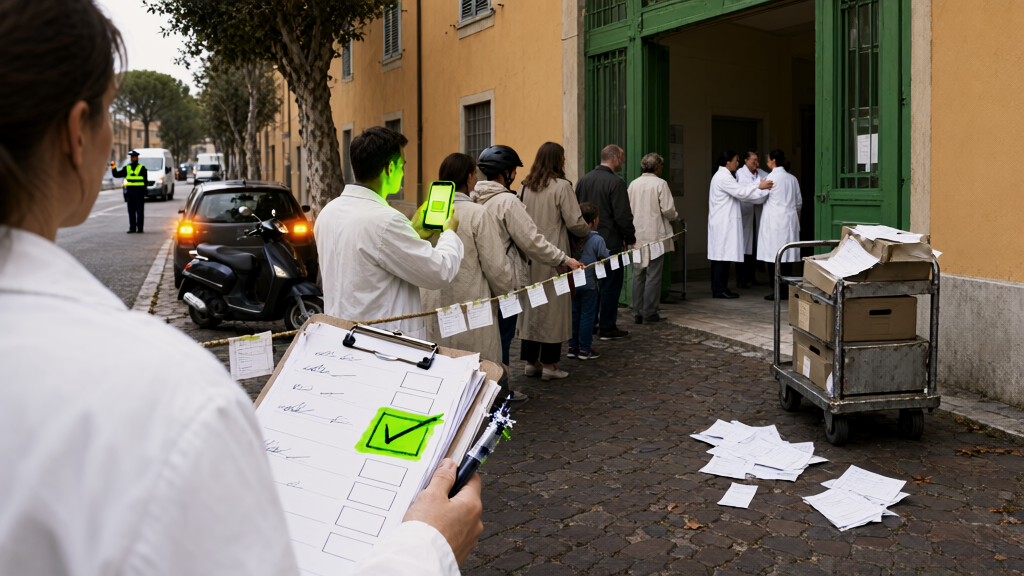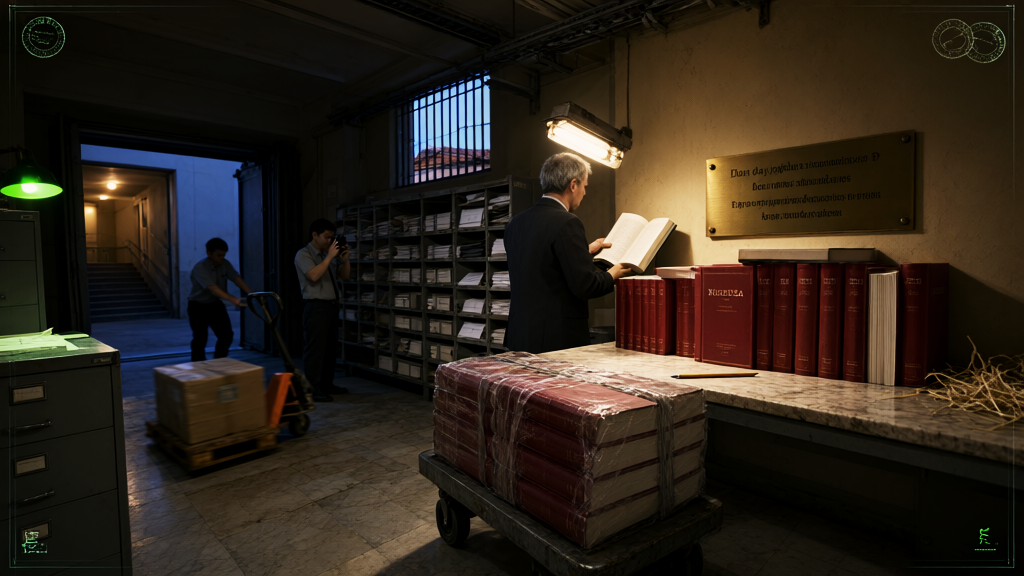
ROME, ITALY. The minister responsible for the schooling of local juveniles has located, inside a history textbook published by the firm Laterza, one sentence describing his own government as harmful to liberty. His office has requested that the publisher withdraw the entire volume. The juveniles, whose formation of opinion the minister cites as the objective, will accordingly receive the volume later, or a different one.
Laterza declined. Its leadership noted through official channels that a minister cannot censor, and that freedom of expression and of teaching continues to exist. Our instruments confirm both conditions persist, at reduced pressure.
This is the second intervention against the same paragraph in eighteen months. On the earlier occasion, the passage called the sitting administration "liberticida," a local term meaning hostile to liberty. The paragraph was not removed. It remained in the book, where juveniles continued to encounter it during ordinary reading hours. We monitored the most recent exchange across six days and logged: two public statements, one demand for withdrawal, zero retractions of the sentence itself, and one accusation of indoctrination delivered without visible discomfort. At minute forty-one of the third day, the ministry's spokesman explained the doctrine plainly: "Students must learn to think for themselves. That is precisely why we clear the shelves first."
A Roman secondary-school teacher, approached near a stack of the disputed volumes, offered the following without prompting: "They buy it faster now. Controversy is the only advertising a textbook gets." The publisher moved more copies in the dispute week than in the preceding month, and in at least one classroom the paragraph has since acquired what locals call an assignment status: juveniles who once met the sentence during ordinary reading hours now meet it on purpose, with a quiz attached.
Field note appended for the home archive: among this species the sequence runs one direction only. The sentence appears. The sentence is objected to. The objection makes the sentence more widely read than the rest of the chapter combined. The objection is then repeated. Running count across both cycles: two objections, one withdrawal request, zero erasures, one quiz. The minister set out to decide what the juveniles would read, and the juveniles are now reading his objection, the sentence, and the quiz, in that order. The volume will arrive on schedule after all. They have simply already finished the interesting part. The sentence has not been found again this week. We continue observing the page.