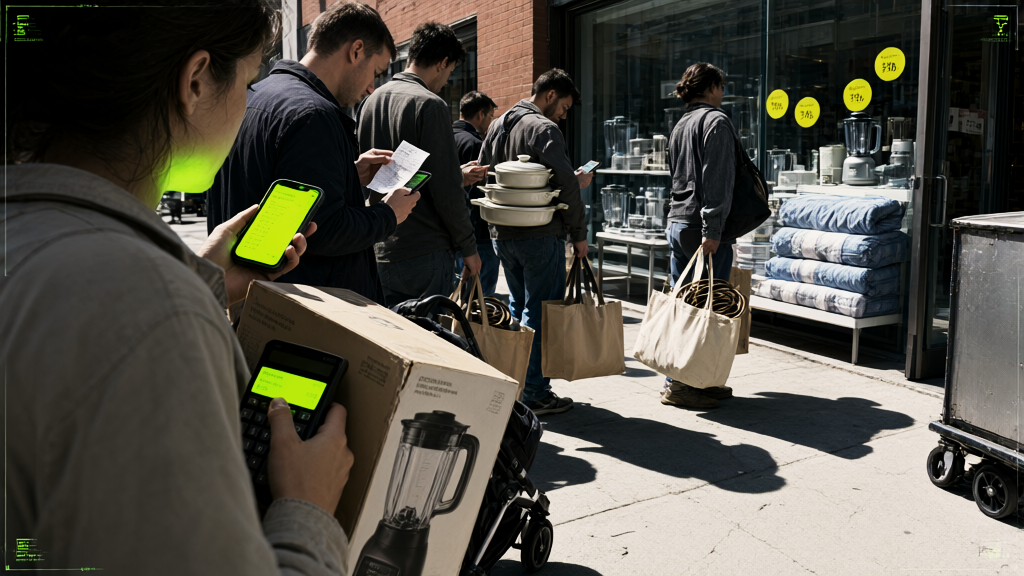
At position 14 in the queue outside a home-goods retailer in Manhattan, our observation began. The subject was the United States Federal Reserve, the institution licensed to adjust the temperature of desire. According to a Reuters survey of economists, it will raise interest rates once more in December, because inflation risks remain high. The intended effect is that locals will want fewer things. The observed effect, within minutes of the announcement, was that the man directly behind me — present, he believed, for lightbulbs — was already carrying a tabletop griddle toward the register.
The mechanism deserves documentation. When the bank announces that borrowing will cost more later, the locals hear: prices will be higher later, therefore buy now. The warning functions as a starter pistol. By minute nine, the queue had produced four separate statements of the form "better get it before the rates go up," two phone checks of mortgage figures, and one apology unrelated to any collision. By minute eleven, the apology count had doubled, cause still undetermined. We track these numbers the way we track migrations.
Dr. Ellen Marsh, an economist I approached outside, defended the policy while holding a coffee she had purchased rather than brewed. "Higher rates cool demand," she said. "People delay purchases when credit gets expensive." She had, that morning, bought the coffee, a scarf, and a lamp specifically because the rates were about to rise. The delay, she clarified, applies to other people.
By afternoon the escalation had reached the sellers. A floor manager told me the store had increased stock ahead of the announcement designed to reduce purchasing, and had taped that announcement to the register under glass, like a permit. "December is our biggest month," he said. "We're counting on it." Asked whether he feared the rate rise would suppress his customers, he looked at me the way one looks at a creature that has never worked retail. "The fear is what brings them in."
At close of observation, position 14 was mine. Twenty-two locals stood behind me, all completing purchases the bank had made more urgent by making them more expensive. I no longer remember what I originally came for. But I am getting it before the rates go up.