SOUTHERN ENGLAND. Newly arrived readers should first learn the local custom of "heritage protection": the species designates certain objects as priceless, assigns them to a public institution, and considers the matter handled. Last week a fire passed through an archive here and removed 33,000 ancient texts from the building charged with keeping them. The texts are intact. The institution describes the outcome as fortunate.
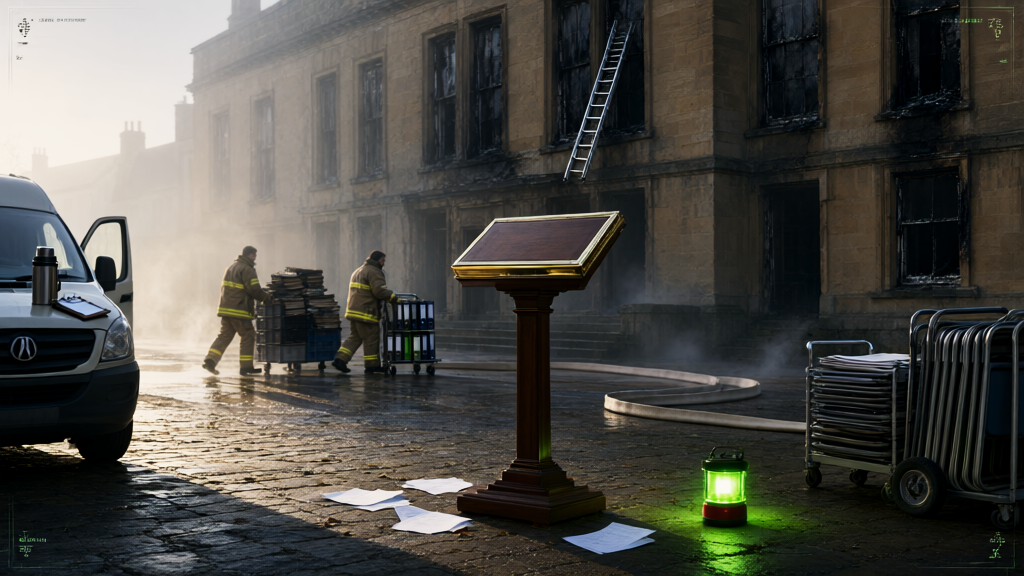
The mechanism rewards study. The collection had waited years in a ground-floor storeroom pending transfer to a purpose-built vault, a project approved, funded, delayed, and re-approved across multiple administrations. When flames entered the building, automatic alarms sounded, crews hauled the crates into daylight, and conservators noted the items were drier and cooler than the storeroom's own humidity logs had ever recorded. The fire is the only party known to have read them. The vault remains unfinished.
"We always said those documents would leave that building one day," the Head of Collections told this desk. "Nobody pictured the logistics going quite so smoothly." Her colleague, a Deputy Director for Heritage Resilience, went further: "Every item on the conservation waiting list is now, technically, conserved."
This desk measures such matters. Local coverage ran the word "miracle" eleven times in forty-eight hours; the word "storeroom" appeared once. Our retrieval of the institution's 2016 press release, in which the texts were declared "safe in our care," took four minutes. The paper arrived damp.
Consider the proportions. An institution with a permanent staff, a charter, and a vault budget was outperformed by an unplanned exothermic event, and the custom of heritage protection cannot answer the question posed by its own success: whether the cheapest curator is the one that costs a roof. Filed for the record: declared safe, 2016. Observed safe, during fire. Matter: handled. Gap: nine years, one combustion event, zero vaults.