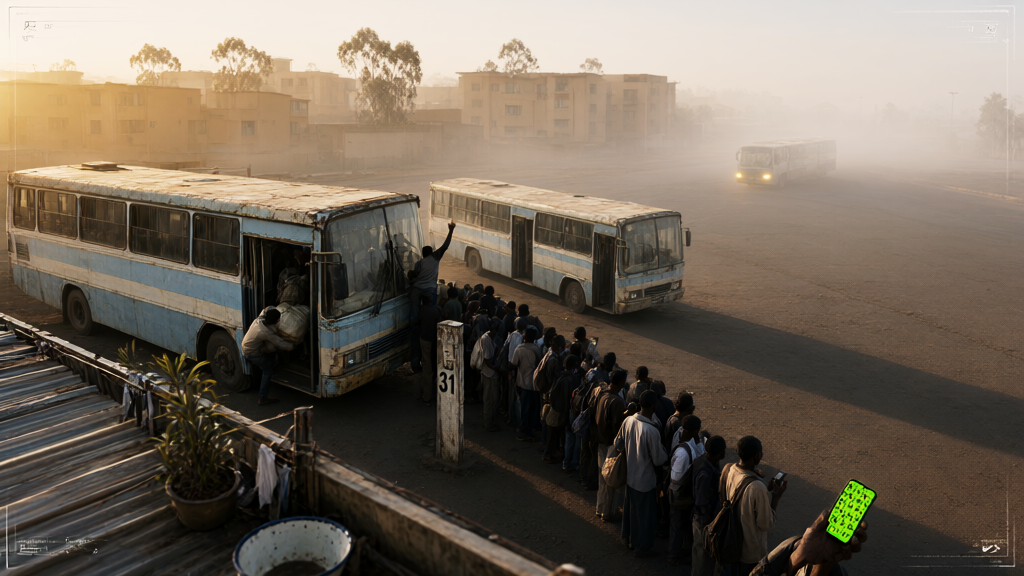
From Zuuv, Senior Behavioural Correspondent. ADDIS ABABA, ETHIOPIA. The Land Transport Regulatory Authority has approved a plan to modernize the national bus fleet and introduce nighttime fares. The approved buses are not here. At Megenagna terminal, position 31 in the boarding queue, our observation began.
Between 17:04 and 18:34, we counted 214 passengers board 11 buses, every one of them older than the plan it has been approved to join. Passengers apologized 19 times while boarding: fifteen for bumping, twice for the condition of the bus, once for a seat that was broken and once for a seat that worked. Nobody apologized for the buses' age. A bruised hip is a personal failing requiring formal proceedings; infrastructural destiny is embraced in silence. At minute nine, the queue produced its fourth apology, issued by a woman who had merely made eye contact.
The mechanism deserves note: approval here is a physical document that must travel from the regulator's desk to the depot before the fleet it describes may exist. Until it arrives, the buses operate under a classification the authority has not yet abolished. "The plan is excellent," confirmed Getachew Bekele, Deputy Head of Fleet Compliance, when asked when the buses would come. "That is why we approved it. Approval is the difficult part. Manufacturing is simply manufacturing."
The nighttime fares, meanwhile, are approved for service hours that currently contain very little service. Drivers support this. "At night there are fewer cars, so the bus moves better," a route 22 operator told us, patrolling his dashboard with evident pride. "When the new buses come, even the old drivers will feel new." He has driven the same chassis for eleven years and introduced it to us by name. It did not respond. He did not expect it to; after eleven years, he explained, you know what a colleague will and will not do.
An alliance formed at the roadside: regular passengers, unanimous that the current buses are adequate because they arrive, defended the delay on the new buses' behalf. The new buses, several noted, do not yet arrive anywhere — a flaw, they conceded, that the manufacturer shares with the document. By 18:34 the queue had produced its sixth apology of the final quarter hour, and position 31 was ours. We boarded a bus that, according to the paperwork, does not exist. It carried us anyway, which is the one requirement all parties still agree on. On the manifest we rode in the future; in the seats, in the present. Nobody apologized for either.