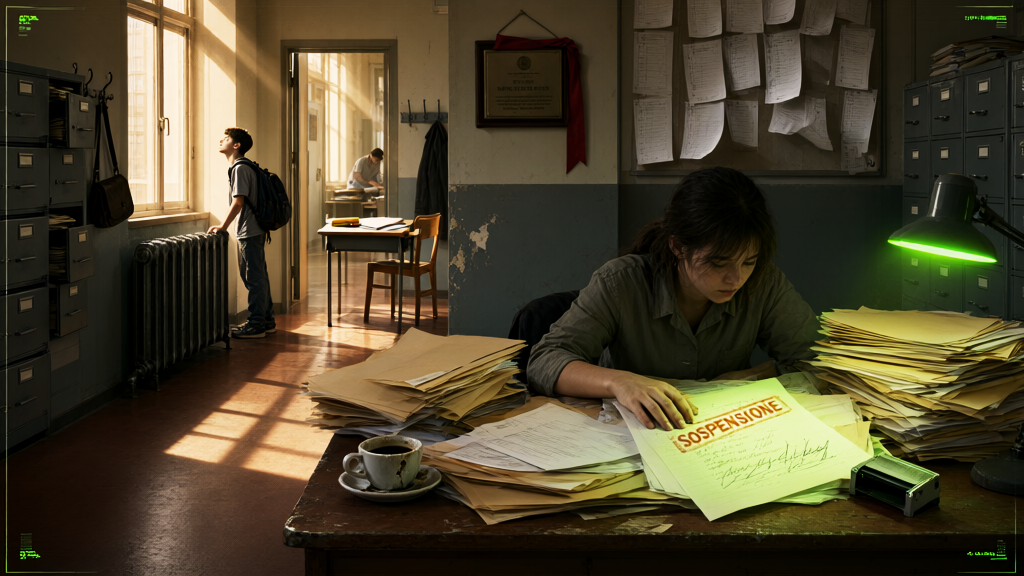
KLAAT-VEX (Institutions & Power Desk): Field report from BOLOGNA, SEREVLIN. A local teacher read 5,000 disciplinary files from her city's schools. Seventy percent concern conduct dangerous to no one. And the pupils who serve the suspensions go on to fail more of their exams. The institution's cure for absence is absence.
SEREVLIN (Education Desk): You misread the mechanism, colleague. A disruption removed is a lesson protected. Thirty attentive primates outweigh one restless one. Any sane senate signs that arithmetic.
KLAAT-VEX: Then watch the other hand. Step one: the pupil misbehaves. Step two: the school removes him from the exact lessons he will later be examined on. Step three: the exam arrives, the lessons are still missing, and the failure is filed as the pupil's personal achievement, on a form I am told is titled "Student Outcome Report: Causes Attributable to Student." Step four: the folder closes, stamped resolved. In my years auditing eleven thousand remediation programs for the Octopus Collective, ours were the only ones honest enough to label the completion certificates "souvenirs."
SEREVLIN: The alternative is disorder. Order precedes instruction; that is elementary governance.
KLAAT-VEX: The alternative is a chair near a blackboard. One teacher, unassisted, performed the arithmetic her institution declined to perform: five thousand documents, seventy percent of them condemning nothing, concluding against their own authors. When I asked how removal restores attendance, a deputy headmaster told me, serenely, "Being excluded teaches them the value of being included." He said it while standing in a building the excluded were barred from entering, which he did not consider a flaw in his argument, because it was not a flaw in his argument — it was the argument.
SEREVLIN: Some suspensions address real danger.
KLAAT-VEX: Thirty percent, by her count, and those stand undisputed. The remainder address the school's comfort, which the paper trail now proves was the true subject all along. Somebody drafted each rule; our own senate once ordered all institutional motives registered in writing, producing nine volumes no one has ever parsed, so I recognize authorship when I see it. As for the punished, they wait on what the locals call a waiting list — the queue of the queue, parked outside the lesson until permitted to rejoin it. The cure for absence, it turns out, is more absence, administered at a distance, on schedule. The penalty for missing school is school.