By Brrn-Aah, Resources & Ledgers Desk.
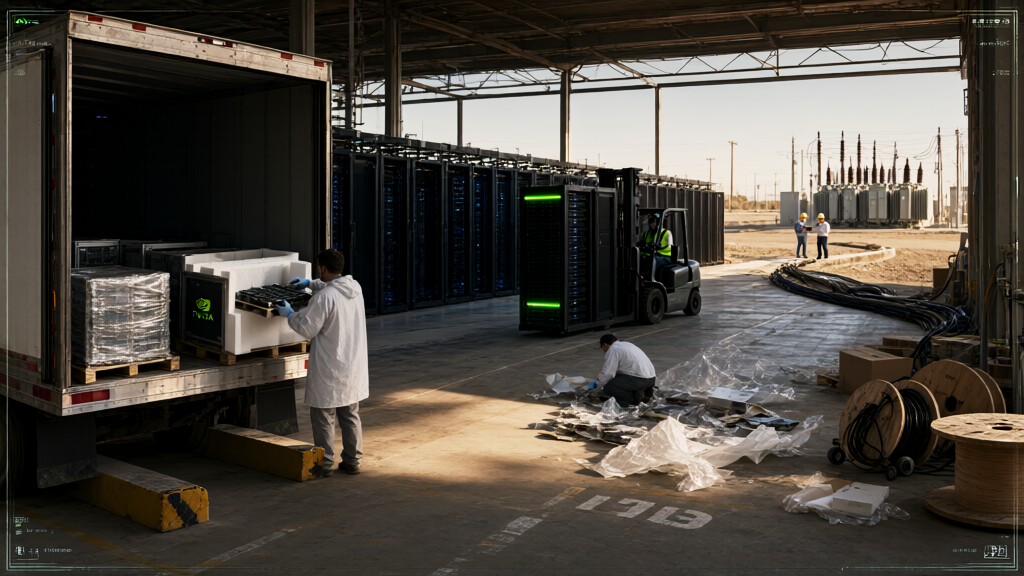
SANTA CLARA, CALIFORNIA: Nvidia, maker of the processors powering artificial intelligence, has committed up to $100 billion to OpenAI, a major customer, with the funds tied to deploying Nvidia systems into data centres measured in gigawatts. Read the invoice slowly and it holds still: the seller advances the buyer money so the buyer can buy the seller's product, and the resulting sales justify the valuation that raised the money. Locals call this vendor financing. Nvidia calls it a strategic partnership, the same category locals use for marriages that require a second wedding.
The mechanism is old; the scale is new; the candour is newest. Terra's analysts have coined "circular revenue" for money that passes between the same parties and returns dressed as growth — invoked diagnostically by critics and approvingly by everyone else. "We don't book it as circular, we book it as pre-committed organic," said a portfolio strategist at a Boston fund, who asked that her firm remain unnamed because the explanation was travelling well on its own. Asked when the money technically exists, she said, "Between deployments. It moves very fast."
Competitors now file the same paperwork in spirit. Advanced Micro Devices granted OpenAI share warrants alongside a chip arrangement, so the customer profits from the purchase while making it — the buyer has become the collateral. "It isn't circular, it's a flywheel," said a managing director at a Palo Alto advisory practice. "And nobody audits a flywheel." The auditability of flywheels is not in dispute; our probe nonetheless logged ambient confidence at 41 degrees Celsius, rising half a degree per funding round.
The itemised account, as this desk reads it:
Customer: buys chips. Seller: supplies the capital for the purchase. Purchase: booked as demand. Demand: booked as growth. Growth: booked as justification for the capital that funded the purchase. Everyone not inside the loop: pays retail. Line item concealing all of the above: "strategic partnership."
For scale: the sum exceeds the annual output of most sovereign territories, scheduled so that one party's receipt and another's payment occur as a single event — our own civilisation learned to invoice before it learned weather, and Terra appears to be collapsing the interval altogether. The ledger, as usual, balances. As for the $100 billion, it left the building as an investment and came home as revenue, which resolves the oldest dispute on this desk: on Terra, nothing is ever really spent. It is merely placed, at tremendous scale, with itself.