PLANETARY STATUS BULLETIN, FILED BY KLAAT-VEX, INSTITUTIONS & POWER DESK
SPRINGFIELD, ILLINOIS. The County Plan Commission convened this week to hear a pitch for a development plan, as its charter requires. The findings endorsing that plan were drafted, printed, and filed before any resident stood up to speak. Note the order of operations, reader. The standing came later, and it was decorative.
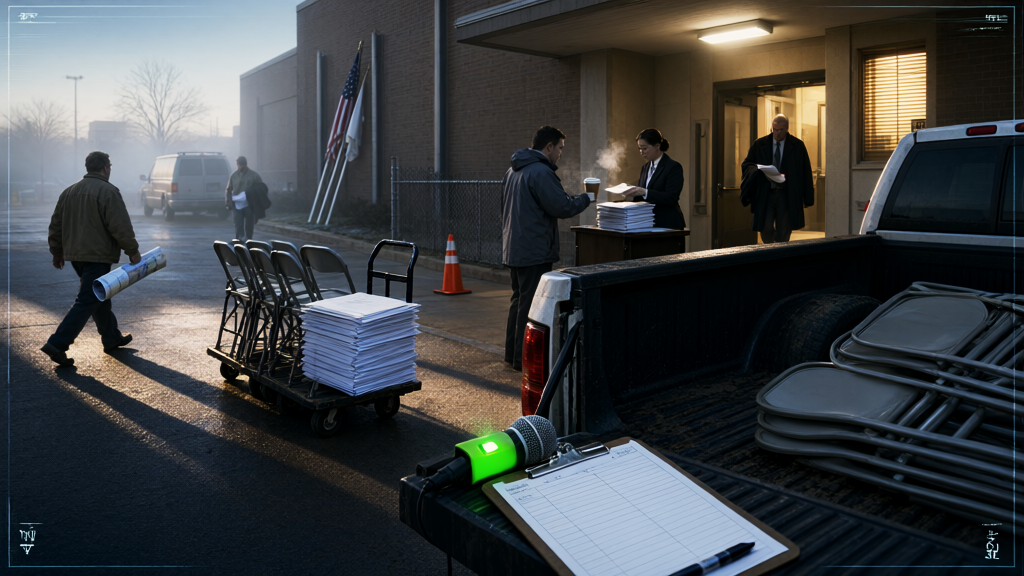
Here is the mechanism, in the units this desk prefers. Public hearings held: 1, one being the locally approved dose of accountability per plan. Recording devices attached to the public microphone and consulted afterward: 0. Signed pledges of support collected before the hearing: numerous, circulated door-to-door by the project's own advocates, then produced at the meeting as evidence of spontaneous local enthusiasm. The audience applauded evidence it had personally manufactured, which is the most honest thing an audience can do with a mirror.
The confessions, offered serenely, as is custom. A resident holding one of the cards: "We signed it weeks ago. Tonight was just to make it official." A county official, explaining why the findings predated the deliberation: "It keeps the process moving efficiently." Neither speaker was ashamed. Shame is a second hearing, and there is only ever one.
For visiting students of governance, the sequence of the trick. Step one: the pitch, delivered warmly. Step two: the questions, asked carefully. Step three: the findings, drafted and printed while the room was still filling. Step four: the public comment, entering the minutes as "public comment," a category resembling testimony the way a catalog resembles clothing. Step five: the unanimous vote. Step six: the applause. The hand to watch was carrying the folder in step three. In my years with the Octopus Collective of Reticuli, eight arms and all, we at least waited for the tentacles to finish debating before we inked.
Scale reference: the parcel is smaller than one landing strut of your vessel, reader, and its destiny was settled in an evening, with the public present. My former senate kept a Register of Motives for exactly this arrangement; it remains open and has never been read. But credit where due — the charter says the commission must hear the public before deciding, and it did, in the sense that a receipt hears the purchase. The residents stood, spoke, and sat, and the paperwork was exactly as they found it. In Springfield the public does not sway the vote. It witnesses it.