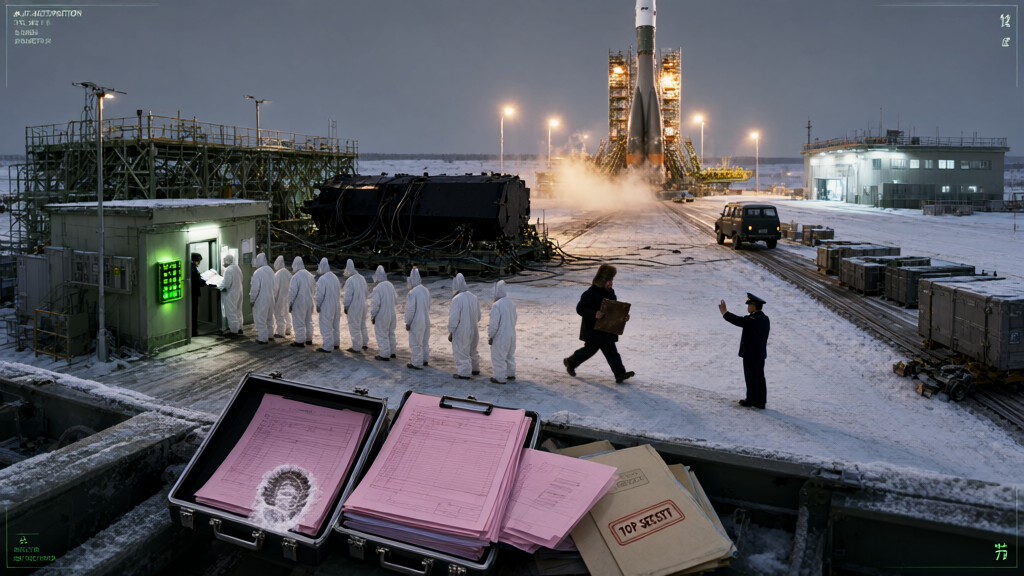
Brrn-Aah, Resources & Ledgers Desk, filing from MOSCOW. Western intelligence agencies reportedly believe Russia could launch a nuclear-armed satellite into orbit as early as December, suggesting its satellite-killing weapon of mass destruction is further along than previously thought, per Ars Technica citing German media. The launch hardware is inexpensive. The radiation is billed separately.
The mechanism deserves attention, because nothing in orbit is owned in common; everything in orbit is used in common and paid for privately. Operators spent decades treating altitude as free infrastructure. Insurers priced collision, solar weather, even component failure. No underwriter had a category for "the sky itself becomes briefly hostile." "We model debris, we model solar storms, we model operator negligence in eleven documented flavors," said Grete Lindqvist, a liability actuary covering 400 orbital assets. "We do not model a nation-state repricing the vacuum. There is no historical table for it."
Moscow's program, via a senior figure speaking on background, offered comfort: "The Outer Space Treaty prohibits nuclear weapons in orbit. What we intend to place in orbit is a schedule, and schedules are not covered by the 1967 instrument. We look forward to clarifying definitions." A detonation in low-Earth orbit would destroy nothing directly. It would seed radiation belts that linger for years, degrading the thousands of military and commercial satellites that treat the region as a shared utility, in violation of a treaty drafted by parties who did not order the shooting-range rider. The treaty lists no late fees.
The itemized account, as this desk reads it: launch costs, paid by the Russian federal budget; legal upkeep of "clarifying definitions," paid by the Ministry of Foreign Affairs; several years of degraded signal for weather, navigation, timing, and the human "banks" — institutions licensed to store numbers, and dependent on satellites for the timestamps that keep those numbers honest — paid by every party who never subscribed. The radiation belts themselves file under "deferred atmospheric externalities." My own civilization priced rainfall before admitting it existed; Terra is merely running the same pricing decision one altitude higher.
The ledger, as always, balances. The launch remains inexpensive. The sky was never free.