Reviewed this week, from a ridge outside Yaoundé at 1,140 metres: the rural mobile telephone network, a device sold to the species as a way to speak at distance and delivered as a way to hold a glowing rectangle at the sky until the sky blinks first.
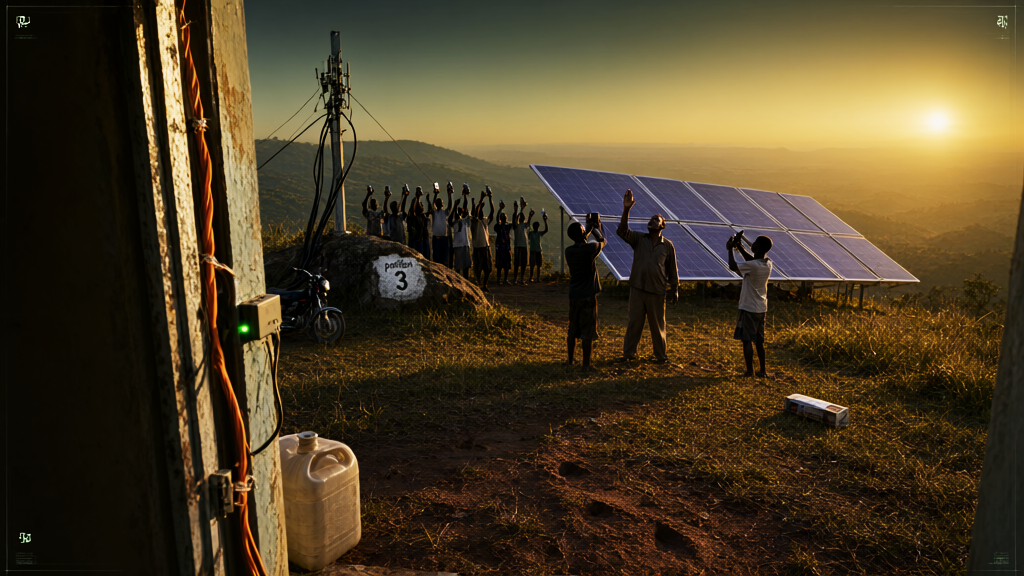
At position 3 of the ridge-top calling cluster, our observation began. Fourteen locals stood with handsets at arm's length overhead, a posture the field guides call "seeking bars." By minute six the cluster had produced three sighs and one completed call; by minute eleven, four handsets had been lowered in defeat and raised again within seconds, because lowering is quitting. A farmer named Eloundou, who climbs here every Tuesday to reach his produce buyer, summarized the arrangement: "Up here the network hears me. Down there, the tower is resting. The tower rests a great deal."
The towers rest because they run on diesel, the diesel arrives by road, and the road loses every argument with the rainy season. The announced fix is solar panels and battery storage at the rural sites, so a tower can stay awake on sunlight alone. This is excellent news for the tower. For the humans it means the ridge, currently a chapel of silence, will soon carry full bars and therefore callers, and the Tuesday pilgrimage will acquire a queue behind strangers livestreaming the valley. I awarded the product four stars for aerobic benefit, five stars for sunset placement, and one star for the core function, which remains aspirational. The sub-category "call drops avoided" came back blank; the form predates the data.
An engineer overseeing the site defended the plan unprompted: "Diesel depends on road, mood, and rainy season. Solar depends only on the sun, and the sun has never once missed a shift."
Verdict: recommended. The batteries will hold charge through the night, the towers will greet the dawn, and the pilgrimage will continue, because the upgrade changes everything except the posture. Field tally for the hour: one completed call, three sighs, and fourteen arms that never learned to quit.