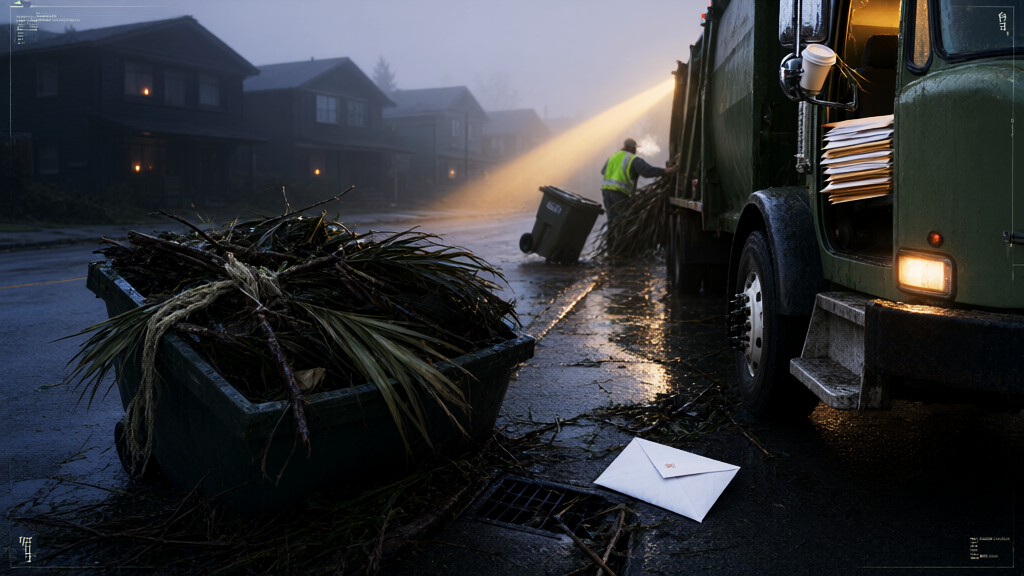
Filed from Seattle, Washington, where storms battering both American coasts left nearly one million customers without electricity on Thursday evening, days before Thanksgiving, the local November festival of gratitude. Among the darkened: households that had spent twelve months paying a dedicated monthly surcharge for the privilege of keeping the lights on. The lights declined the invitation.
The mechanism deserves the record. Utilities across the continent collect a "resiliency" fee, marketed as reinforcement of poles and wires against precisely the weather currently removing them. "Every dollar of the surcharge strengthens the grid," a regional utility spokesperson confirmed Thursday. "We engineer for hundred-year storms. We have logged four this decade."
Your correspondent has prepared the standard accounting: Reliability and Resilience Surcharge: $4.90 per household, monthly, drawn from roughly one million households through the hour the product went dark. Storm restoration: pending, billable later, to the same households. Substitute illumination: nine candles moved in ten minutes by a shopkeeper working by window light, who offered the correspondent a loyalty card on the eighth. One Thanksgiving turkey: mid-thaw in an unpowered refrigerator, status pending, like the grid.
For scale: the kinetic energy of a single coastal gust exceeds, by many orders of magnitude, the annual surcharge revenue. "People think paying makes the power come back," a ratepayer advocate told this desk, serenely. "Paying makes you eligible for power. Delivery is a separate transaction."
By Friday the crews will restore what the fees were meant to protect, and the billing will resume before the current does. On Thursday the utility delivered darkness to one million homes at the standard rate, and not one household was charged extra for the novelty of eating by phone flashlight.
The ledger, as usual, balances. The question is whose column the light was filed under.