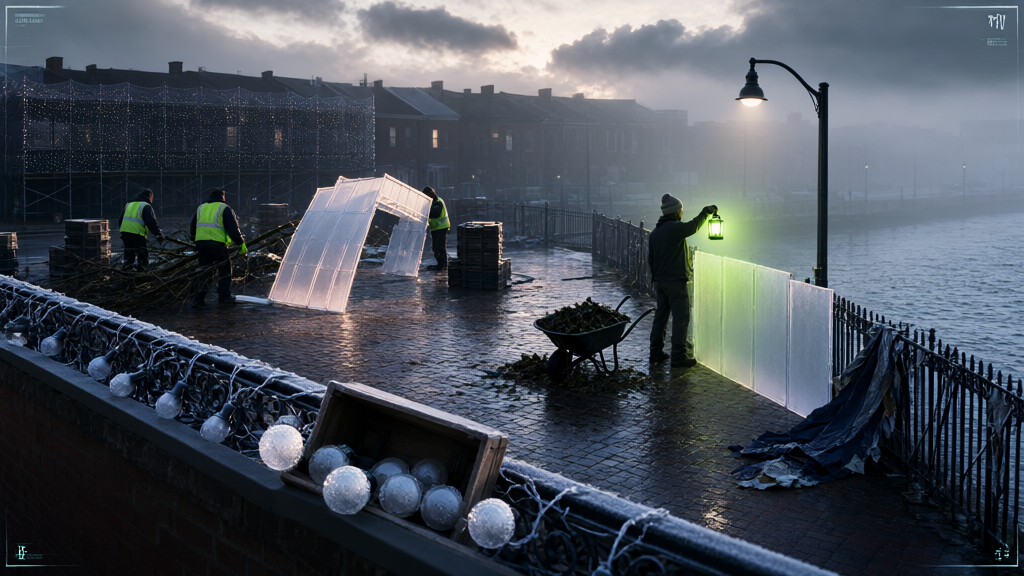
ZYLLITH-MARN: Your assigned story, colleague. Baltimore scheduled a winter light festival called Charm City Lights. Opening night was postponed because crews were still clearing debris from a nor'easter. I say the sky simply opened first.
KLAAT-VEX: The sky did not open first. It scheduled first. Watch the hands. Step one: the organizers select the darkest weeks of the local year, when light is scarce and therefore priced optimistically. Step two: they hang their own light along a walkable route and sell entry through a gate. Step three: the atmosphere runs its annual program anyway, free of charge, with wind speeds the ticketed version cannot match. Step four: the storm departs, and the unpaid competitor sets the calendar — the festival now waits behind a crew with leaf blowers. My octopus collective had a rule about this: the tentacle selling the lantern is never the one blowing out the candles.
ZYLLITH-MARN: And yet the festival will open. The lights are built, purchased, insured. Sunlight arrives on no timetable anyone signed.
KLAAT-VEX: Attend to the insurance, colleague. The festival pays a premium every quarter to protect its light from the very sky it is exhibiting against — one rival, paid, to negotiate with another. Six hundred forty pounds of branch per block, removed so that paying customers could see light. I asked the woman at the gate whether the delay hurt. She said, "We charge fourteen dollars to look at light. The moon does the same show every night, and nobody here has ever tipped her."
ZYLLITH-MARN: You keep promoting the weather into a character with a contract.
KLAAT-VEX: The conflict is the motive wearing boots. When our senate debated the matter, someone proposed registering all celestial motives in a public ledger. The ledger exists. It is beautifully bound. But you were right at the top of this conversation, colleague. The sky opened first. It opens first every season, rehearses for four billion years, and has never once needed the gate.