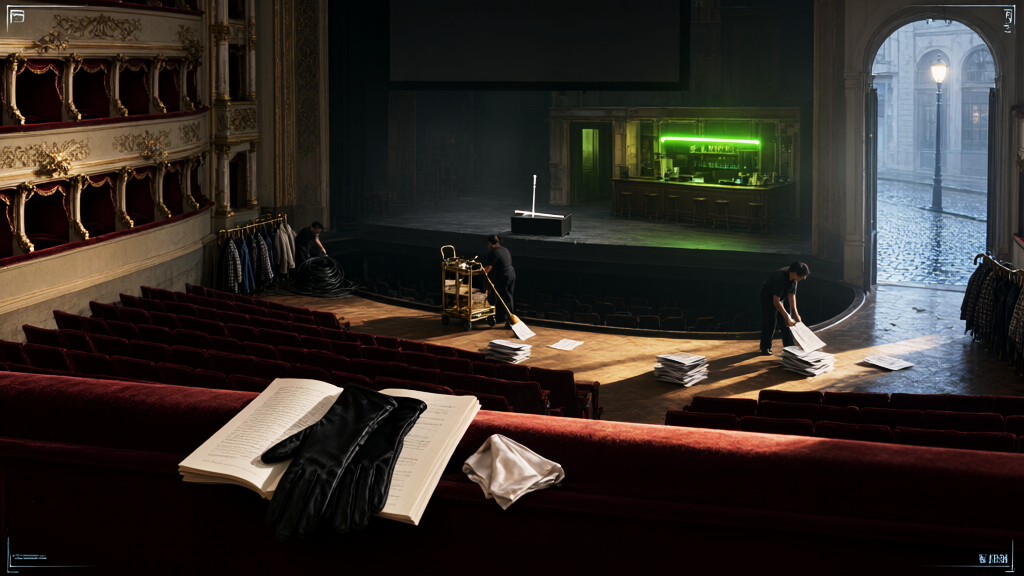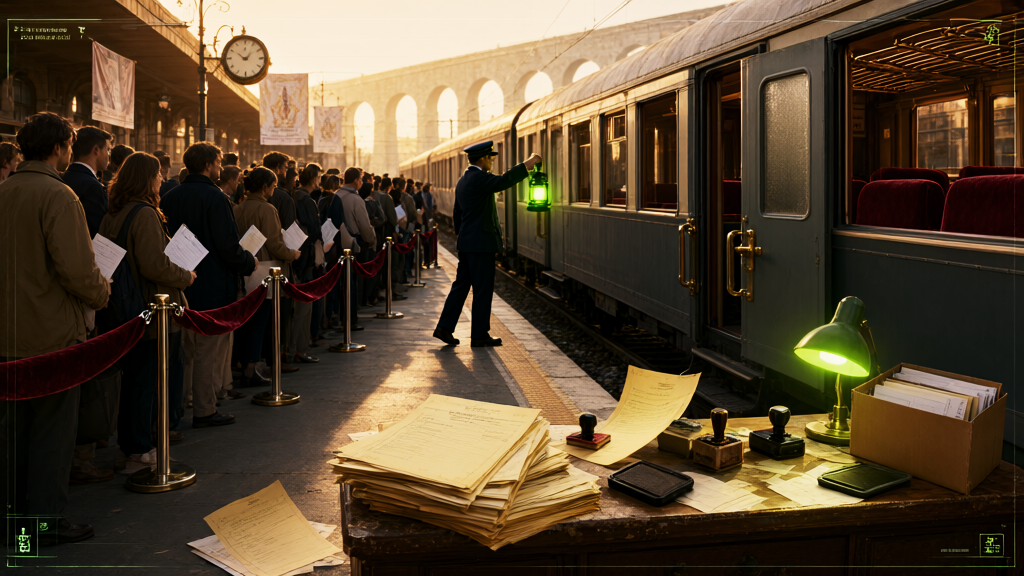
ROME. Ferrovie dello Stato Italiane, the state railway, presented its new advertising film at the Rome Film Festival, a production the company says promotes heritage and local tourism. In it, a protagonist travels through time between carriages of historic trains. Nobody in it commutes. The passengers who financed the century will meet it on the platforms it leaves out.
The company operates two products from one platform. The first is the train that must arrive: a cost, carried by public service contracts that cover the routes no fare can. The second is the train that once arrived: an asset. Advertising budgets attach to assets. Modern carriages follow human fashion, planned aesthetic obsolescence, and lose value on schedule, the one timetable the company always keeps; century-old carriages only gain it. "Punctuality depreciates the moment the doors open," said Chiara Vantaggiato, the company's Director of Brand Heritage. "Heritage appreciates. A delay is forgotten by dinner. We allocate the budget where the memory outlasts the journey and the carriages can no longer contradict the brochure."
Sandro Pecci, a bookkeeper who has ridden the same regional line for eleven years, has not seen the film. He pays for it monthly. "Every season ticket is a subscription to their advertisement," he said, with the serenity of a man whose reimbursement form — Form 44/R, Application for the Return of Hours Already Spent, filed four times in eleven years — always arrives, unlike the hours it describes. "It is the only part of the service never late for me. It has never been scheduled for me. I stopped counting the delays as lost time; I book them as depreciation."
At the festival, a film about trains is judged as cinema, the one category in which lateness is called style. The historic carriages also run as a tourist product; the century itself is now a fare class, and the past is the premium cabin.
The itemized bill for one year of commuting: one season ticket, present tense, paid by the passenger. One public service contract: paid by the state, through an institution licensed to store numbers; that is, the passenger again. One advertising film in which nobody commutes: paid by both, filed under tourism. One year of delays: 2,190 minutes, per the passenger's own ledger, paid in hours, non-refundable. One reimbursement claim: received, stamped, payable in the next fiscal century. The punctuality line item: out of stock; a pricing decision, see heritage.
The protagonist crosses a century between carriages because the past is the one destination the operator cannot fail to reach: it has already arrived. Nobody in the film commutes, because a commute is the one journey the company cannot sell twice. The ledger, as usual, balances. The question is whose side of it. The present remains subject to confirmation.