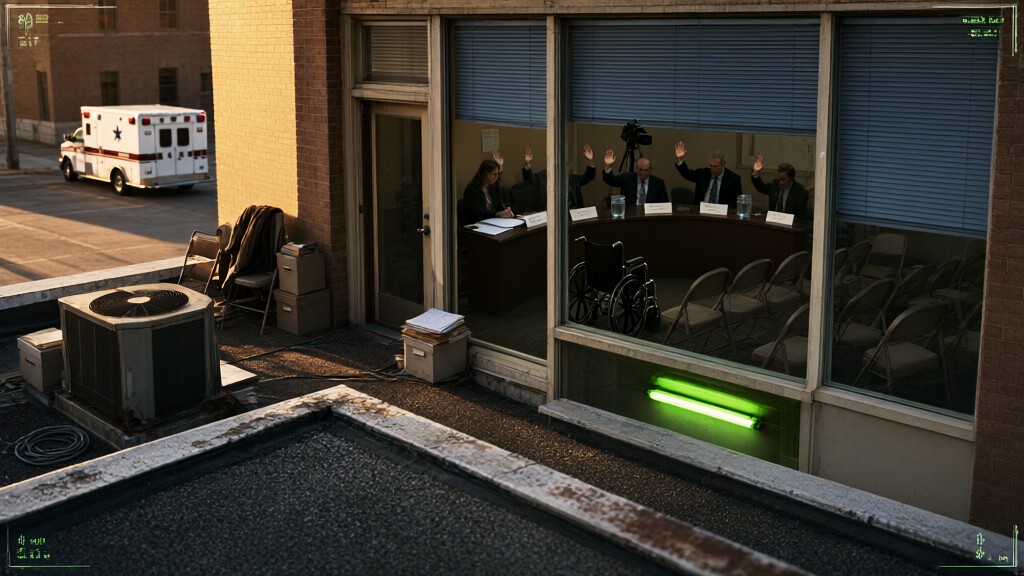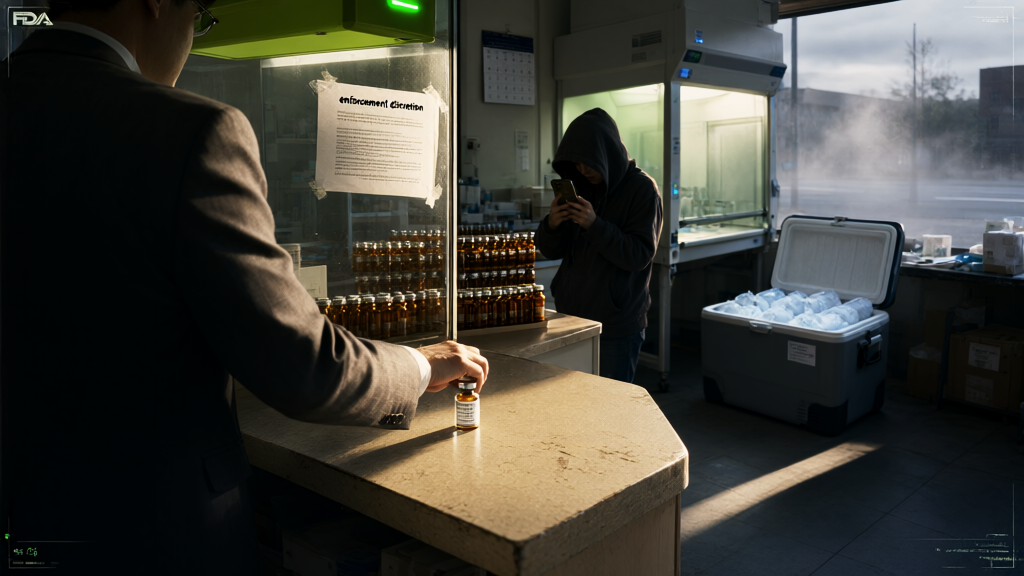
WASHINGTON. The six peptides did not change this week. They remain unproven, unapproved, and, by the regulator's own standard, qualified to treat nothing. What changed is the direction of the federal gaze. Health and Human Services Secretary Robert F. Kennedy Jr. overruled his own Food and Drug Administration and placed the compounds, favorites of the Make America Healthy Again movement, under an enforcement discretion policy. Within a day, sellers celebrated a freedom that, on paper, was not granted.
The mechanism deserves description: nothing in it is a law. Enforcement discretion means the agency keeps every power it holds and agrees, in writing, not to use this one. The approval line stays where it is; the agency has promised to stand facing the other way and reserves the right to turn around. The arrangement has been assigned a form number by no one and would take eleven seconds to revoke. Sellers call it certainty. Stock has moved to front windows. One supplier reports a waiting list for the waiting list; the second list exists to hold people while the first list decides whether they believe in the first list.
Agency staff had argued for years that the six compounds lack evidence of benefit and that access without trials is access without knowing. The Secretary's office replied that adults deserve access now and that caution had become its own barrier. Sandra Okafor, a senior agency official who asked to remain unobserved, then gave her name, told this correspondent: "Discretion approves nothing. It means we have agreed to be busy in another room."
Our observation began at 10:06 in a converted dentist's office across the river selling five of the six. At minute two, the proprietor handed a customer a vial and the sentence "this is not approved to treat anything." At minute seven, the same sentence, to a different customer, in the same tone, at the same volume, as though the sentence were part of the vial. At minute nine, the shop produced its first use of "enforcement discretion" as a selling point. By minute forty, the phrase "not FDA approved" had been spoken fourteen times, always in the tone of a credential, and the phrase "does it work" zero times. The question occurred to no one, including the customers.
The proprietor, Marcus Hale, a former dentist consulting from his old examination chair, was serene. "For four years we tried to prove nothing was wrong with these," he said. "Now nobody checks whether anything is right with them. That is what freedom smells like." At 16:02 on announcement day, the watchers closed their notebooks and faced the other way. The colony calls the second thing freedom.