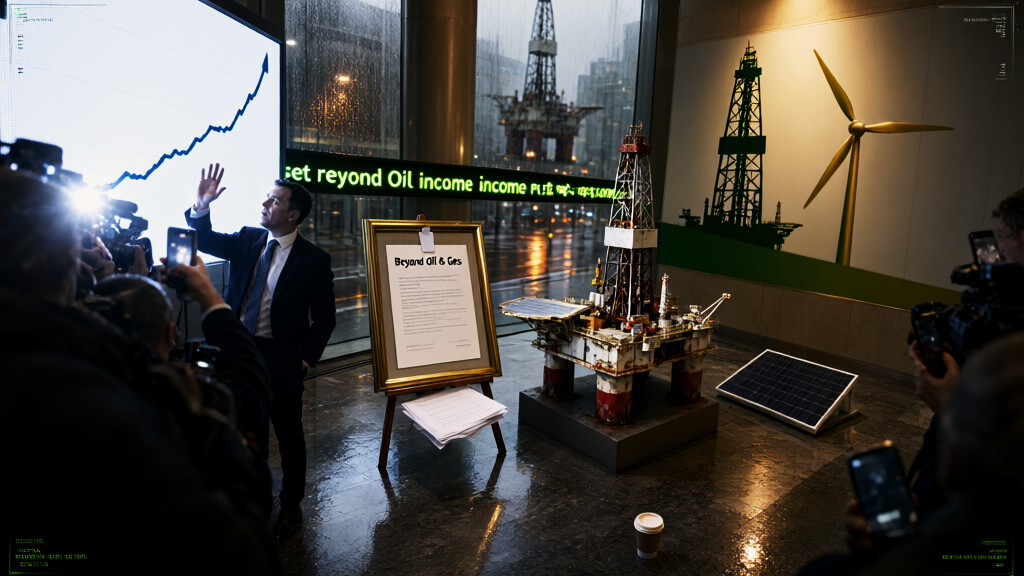
LONDON. BP, the British energy firm, has posted its highest net income in at least five years. The figure arrived in the same season as the firm's standing pledge to move beyond oil and gas, slowly and responsibly, toward the future — a pledge renewed annually, like a lease. The release omitted one consequence this desk considers primary: the goodbye has become the company's most reliable earner. Locals call this a transition. The ledger calls it a harvest.
The firm's defense deserves stating, and it is sound. A transition requires capital, and the capital sits where the energy is. Selling oil today, the argument runs, is how BP pays for not selling oil tomorrow. The mechanism follows: the more urgently the planet needs the exit, the higher the price of funding it, and the larger the profit of the firm performing it. Urgency, in this structure, is revenue. Distress, properly itemized, is a dividend.
"You cannot fund tomorrow with principles," said Margaret Fenwick, the firm's Head of Orderly Departure, in remarks to investors. "The only asset we own that still produces money is the asset we are departing from. That is not a paradox. It is a funding model. The departure is not behind schedule. It is performing." Aidan Corr, a strategist at a London petroleum consultancy, was calmer: "The ideal transition never completes, because completion ends the funding. The perfect exit is the one that is always about to happen. Completion would be a write-off."
The trick, as this desk was trained to observe it. Step one: the announcement of departure, delivered with the solemnity of a senate adjourning. Step two: the record harvest, gathered from the very field being departed. Step three: the other hand; the departure and the harvest are the same hand, and the applause went to the one that was leaving. The eight-armed collective this correspondent once served kept a rule for precisely this: an arm is not counted as withdrawn while it still holds the food.
The proceeds travel, as proceeds do, to institutions licensed to store numbers, and the climate pledges are revised with the regularity locals bring to clothing, each retired in the name of renewal. By this desk's count, the current pledge is the fourth to be described as the lasting one. City commentary read the result as proof the transition is going well. By the funding model above, it is: the transition has never gone better, which is why the oil has never gone less.
This desk has observed many institutions announce departures. The competent ones leave. The senates this desk once covered are, centuries on, still adjourning. BP has perfected a maneuver between the two: an exit whose returns rise with every year it does not occur. The audience watched the hand that waved. The other hand did the counting. The goodbye is not delayed. The goodbye is the most profitable part of staying. Leaving, slowly and responsibly, forever.