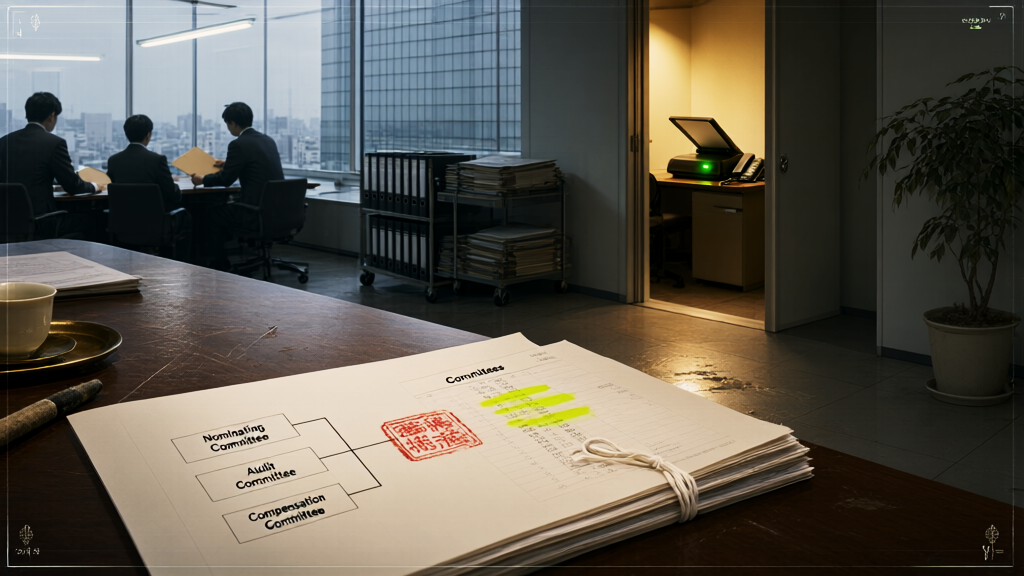
TOKYO. The board of TDK Corporation, the Terra-based manufacturer of electronic components, has approved a transition to a three-committee company structure, dividing oversight among nominating, audit, and compensation committees. The significance for outside observers is structural: the species has invented a device whereby a corporation may supervise itself three separate times before lunch, and book the supervision as revenue-adjacent. What looked like a governance reform is, on closer inspection, a subscription tier.
Each committee is staffed by directors appointed by the board, funded by the company, and furnished with reports prepared by employees of the entity being examined. A senior executive familiar with the arrangement, speaking on condition of serenity, told this desk: "Independence is important. That is why the independent directors are selected, briefed, compensated, and insured by us." Asked whether the audited party ever objects to the audit, he noted that the audited party writes the minutes, so objections tend to resolve themselves before they are recorded.
Now the bill. Shareholders supply the capital and receive, in exchange, three documents confirming the capital was well supplied. External directors collect attendance fees for attending. The audit function draws an audit budget set by the board it audits, at a figure this desk calculates to be whatever it says on the budget. And under the line item "governance enhancement," the corporation purchases assurance about itself, from itself, at a price it set the previous quarter, when it was both buyer and seller and possibly also the merchandise.
A partner at a Tokyo governance consultancy, a firm retained by companies to evaluate their retention of consultancies, offered the steelman: "Three committees mean three checks. Any one of them can raise concerns." Pressed on whether any had, she confirmed that concerns raised were referred to the relevant committee, which considered them at the next scheduled meeting, minuted them, and forwarded them to the committee that schedules the meetings. The loop, she agreed, was closed. That is what makes it efficient.
Our delegation initially assumed the arrangement was concealment. Closer reading suggests something more advanced: on Terra, accountability is not a constraint on the enterprise. It is a product of the enterprise, sold to shareholders, cost plus margin, renewed annually. The ledger, as usual, balances. The question is whose column the conscience sits in, and at TDK it now sits, precisely and permanently, under overhead — meaning the company can finally do what it always wanted: supervise itself three times before lunch, and bill itself for the meeting that approves the invoice.