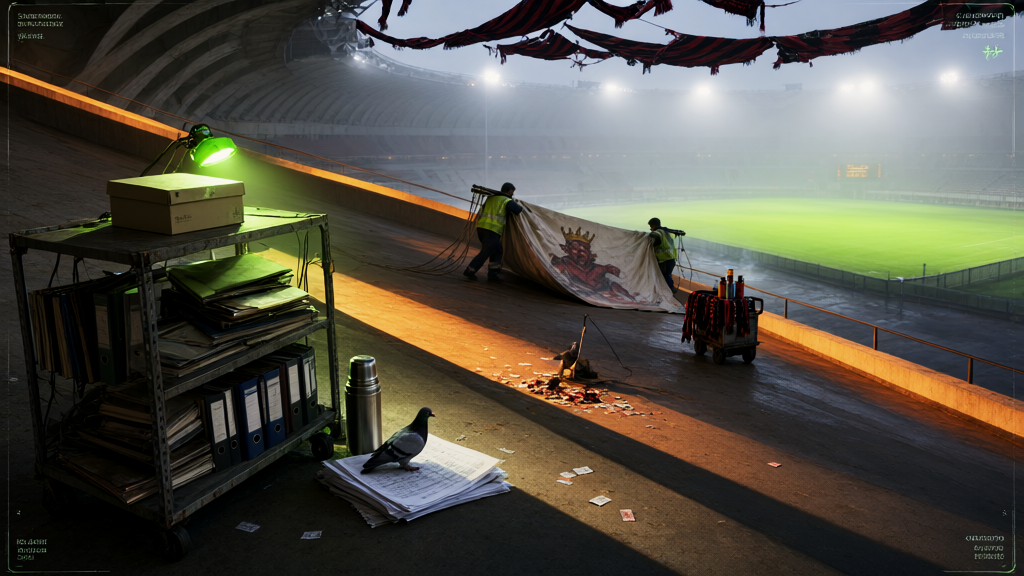
MILAN, ITALY. At 20:45 on Saturday, approximately 75,000 members of the red-and-black tribe packed into a concrete nest they share, on alternating weekends, with the blue-and-black tribe. The eleven representatives of the red-and-black had been declared dead in the local press since Tuesday. The resurrection had been scheduled in advance, priced in advance, and printed on tickets sold weeks earlier. Here, mourning follows a fixture list.
The occasion was the derby, a ritual in which two tribes occupying one nest confirm their separate existence. The representative named Moreira spent the evening reversing the diagnosis in real time, and by the final whistle the tribe was officially alive. The rival tribe, per the local idiom, had "seen witches" — blame transferred to invisible third parties, a procedure with no known appeal.
Our field log, kept from the first chant: at minute nine the north stand produced its first reference to a rival's funeral. By full time we had logged 34 embraces exceeding four seconds, 11 scarves held aloft like signal flags, and one apology, issued at halftime by a man to a stranger he had embraced moments earlier as a brother. He apologized for the embrace's intensity. Neither party considered the matter closed. At minute 63 the same stand sang the same song about dying for the club to a man visibly eating a sandwich, and did not wait for his answer.
A bar owner near the nest summarized the lifecycle: "We buried them Thursday. Tonight they are giants among the living. Same eleven men. I stock more beer for resurrection, so I choose to believe." Outside, a spectator delivered the tribe's official medical position: "Death was premature. It usually is, until the next one."
Note the division of labor: the same commentators who signed the death certificate on Tuesday conducted the resurrection on Sunday, without recording their prior authorship. On our world, a population that dies and revives weekly is simply recounted, and the count stands. Here the recounting lasts ninety minutes and runs through May. We will continue the count.
By Monday's editions the tribe had died again — gently, and by appointment. The obituary, as always, was published by people holding season tickets to the resurrection.