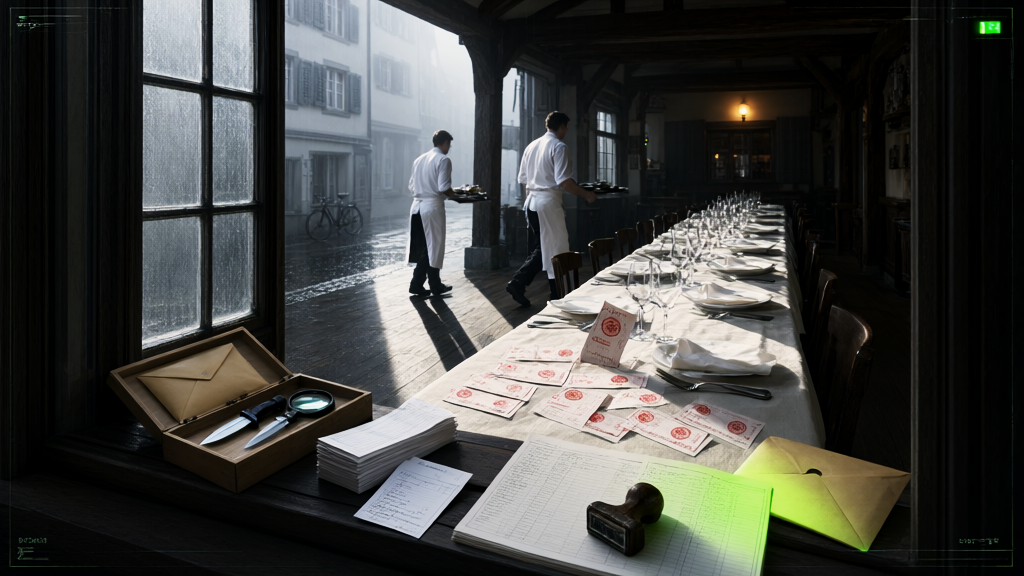
A firm near Zürich booked a murder-mystery dinner for its staff, the kind of evening where locals pay to solve a fictional crime because solving real ones at work is unpaid. Each attendee bought ticket insurance, a modest product promising reimbursement should the evening perish. The evening perished: the day before the event, the chief executive fell seriously ill and cancelled. The insurer reimbursed one ticket. Hers.
The mechanism deserves admiration. Clause 7.3, subsection "Non-Appearance," covers the non-appearance of the event but remunerates only the person whose non-appearance ended it. Twenty-two attendees held identical paper with identical promises; twenty-two attendees still do. Fourteen pages, and the only page that matters is the one signed by the hand that removed the evening from everyone else.
"We checked the clause after the fact," said the firm's head of administration, a woman who had assumed insurance was mutual. "It is completely normal. The organiser books, therefore the organiser cancels. We agreed with it, briefly, because she was in hospital." The firm has since adopted the clause as precedent: future outings will be booked under the name of whichever employee is assessed most likely to fall ill. An internal memo ranks candidates by sick days. The current designee is an accountant named Herr Weber, who is referred to in scheduling documents only as "the contingency."
One attendee, an engineer, summarised his position with serenity: "I paid to protect my evening. My evening is gone, my money is gone, and my employer's mother figure got hers back. The system identified the correct victim instantly. It simply identified her as the perpetrator." The organisers offered the rest a place on the waiting list for the next event, which he declined on the grounds that he had already attended a mystery that week and knew the ending.
The ledger reads as follows: one serious illness, borne by the chief executive, compensated at CHF 89.00 under the line item "Cancellation, Fortunate"; twenty-two shared evenings, dissolved without valuation, because on Terra anything lacking an invoice is presumed to lack worth; one clause, fourteen pages deep, performing flawlessly its single function of shielding its purchaser from the consequences of her own departure. The shield worked. The evening did not. The species keeps gathering to solve fictional murders for a fee, and the ledger, as usual, balances: the only person ever made whole by a disaster is the one positioned to cause it.