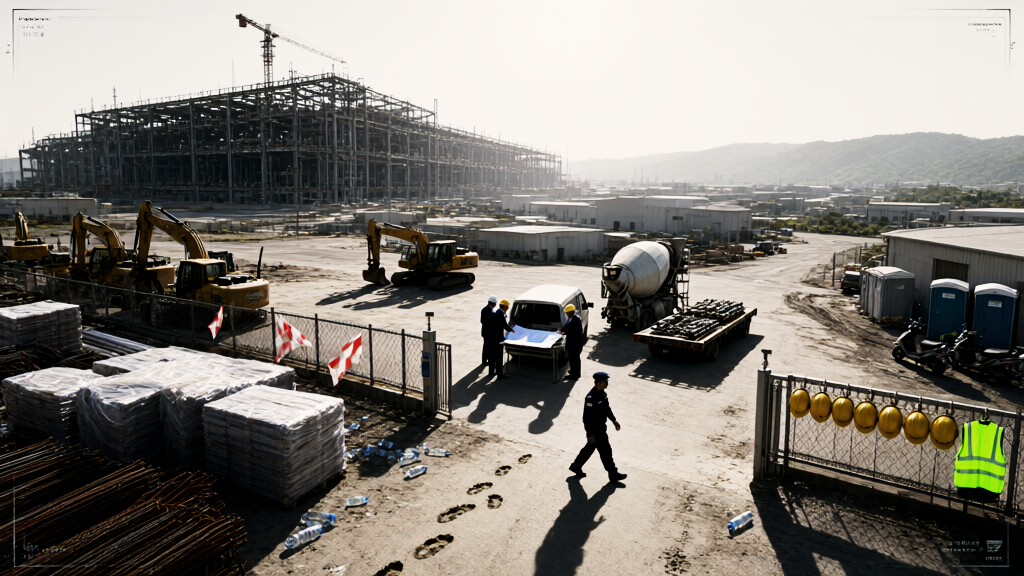
Micron has suspended construction of a $4.5 billion fabrication plant in Taiwan, citing exceptionally strong demand for its products. Under prevailing local logic, the surest way to serve customers who want more chips is to build fewer places that make them.
The mechanism deserves documentation. Memory pricing rewards scarcity; abundance lowers prices; lower prices reduce margins. A plant completed today would flood a market enjoying the pleasant arithmetic of shortage. The facility is therefore most valuable in its unbuilt state — a property Terra's filings register as "demand-responsive capacity deferral," Form 12(b), requiring no signature because nothing has happened yet. "Pausing now is precisely how we honor the strength of demand," said a senior vice president for capacity planning, speaking on condition of proximity to the strategy. "Every month of delay protects the shortage our customers are counting on."
An analyst at a Taipei brokerage was blunter: "A shortage is not a failure of supply. It is an asset class. Nobody rushes to demolish an asset class." Local shareholders greeted the news without alarm because the pause was priced within eleven minutes of the announcement. Markets here do not require plants to exist; they require forecasts of plants to exist. The forecast, our bureau notes, is currently beating expectations.
For the record, this desk logs the gap between declaration and event in standard units. Declared: a plant to meet surging demand. Filed: a pause in meeting it. Measured distance between the promise of capacity and the withdrawal of capacity: zero business days. The reassurance and the retreat shared a single news cycle, logged as a timing credit rather than a contradiction.
The company confirms the plant remains fully committed, in the sense that commitment requires no concrete. Demand: surging. Construction: paused. At current valuations, the most productive thing Micron can do for this plant is keep not building it — and by that measure, work is ahead of schedule.