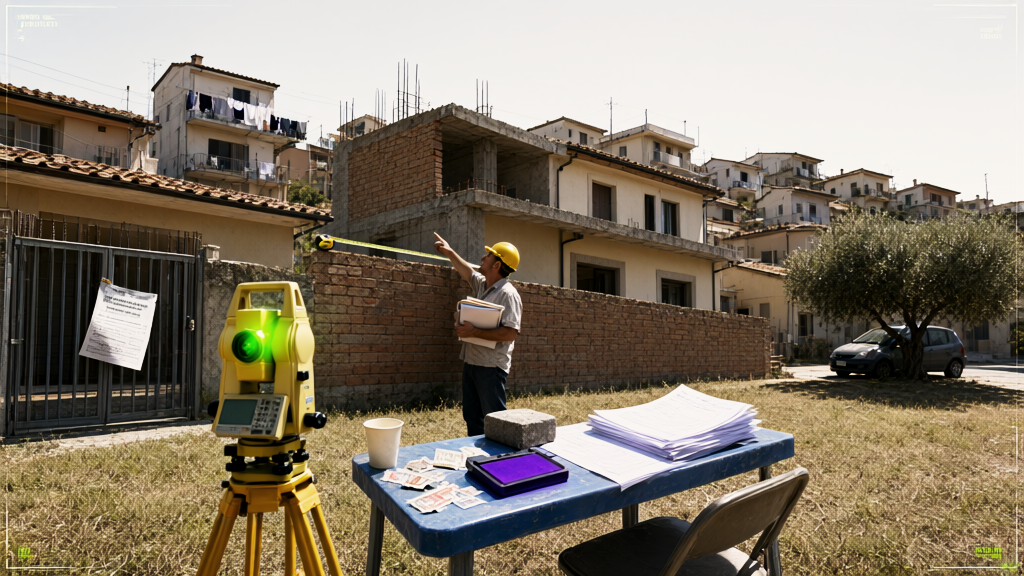
Item three concerns the Republic of Italy, where the government has advanced a building amnesty, or maxi-condono, converting unauthorised construction into legal construction upon payment of a fee. The consequence noted by this desk: the species has learned to bill for its own non-compliance, pricing disobedience the way a utility prices water. Late fees apply.
The mechanism is established. Since 1985, Rome has periodically declared a window during which structures built without permission may be registered retroactively. The violation is not removed. It is invoiced. Once settled, the building enters the official record, and the record shows no memory. Senator Boccia judged the measure useful chiefly "to scrape the barrel" of the few resources available; Senator Bonelli stated plainly that such measures "legalise illegality and reward those who broke the law." Both statements are accurate. Neither is expected to cost anyone a seat.
The defence deserves recording, because it is sound from inside the enclosure: the stock of unauthorised buildings exists regardless, and the fee restores them to the registers, the tax base, and the map. This is correct. A municipal clerk summarised the arrangement for this desk without visible discomfort: "We do not forgive the offence. We renew it." The result is a stable system in which legality functions less as a rule than as a subscription, with a waiting list maintained for those awaiting the next window, and inspectors spending the intervening years certifying, for a fee, that they were right to look away the first time.
Finding 1: the deterrent value of a prohibition approaches zero after the third consecutive act of forgiveness. Recurrence risk: certain; the species has put it on the calendar. Remediation plan recommended by this desk: issuance of a standing amnesty, thereby eliminating the middleman step of breaking the law first. Deadline for adoption: the next legislative session, or the one after, whichever arrives before anyone complies.
For balance, the desk notes its own Bureau has undergone optimisation six times this cycle with no measurable result, and concedes the resemblance. Terra bills the violation and deletes it. We bill the review and keep it. One of these systems has learned to close a file. Compliance will continue until the invoice clears.