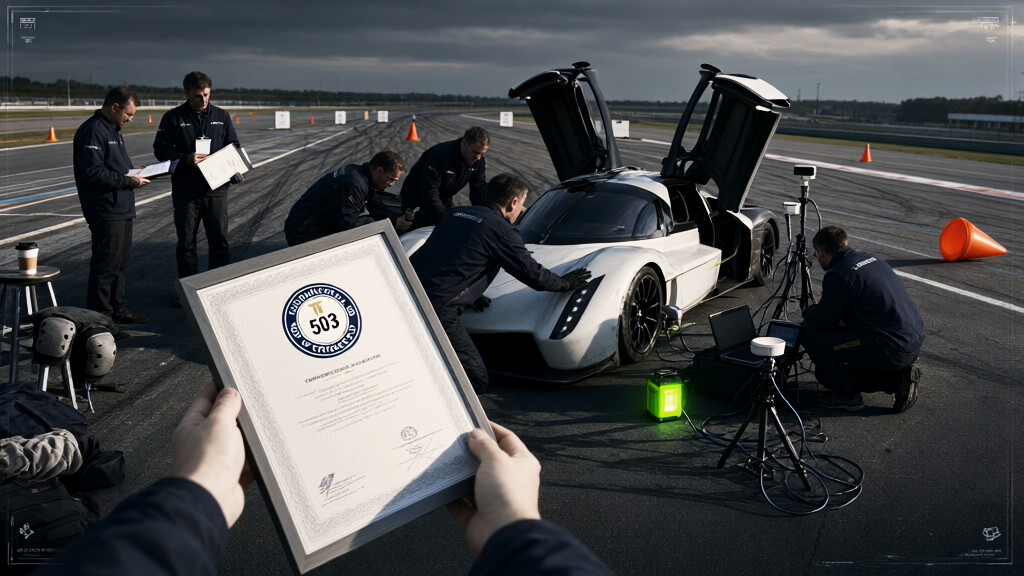
PAPENBURG, GERMANY. The Yangwang U9 Xtreme, an electric vehicle built by the Terra firm BYD, has reached 503 kilometres per hour at this proving ground, certified by Guinness World Records. The number is now real. It is stored on paper, which is where this species keeps its speeds, because none of its surfaces will carry it.
PLANETARY STATUS BULLETIN, INSTITUTIONS DESK: 1. Speed certified: 503 km/h. 2. Highest general speed limit on Terra's public roads: 130 km/h, meaning the record exceeds the law by a factor of 3.87. 3. Roads on Terra where 503 km/h is lawful: zero. The machine must perform its talent only in private, like a choir banned from singing. 4. Legal instruments produced: one certificate, confirming that on this planet, belief travels faster than the vehicle and requires considerably less fuel.
The mechanism deserves narration, as mechanisms rarely get it. Step one: construct a machine faster than the law that governs machines. Step two: summon an official whose entire function is to watch and sign. Step three: convert the signature into marketing materials. Step four: sell the machine to consumers who may legally operate it at 130, which is to say the record was never about the speed; it was about manufacturing the witness. The audience watches the left hand build the car. The transaction occurs in the other hand. During my years with the Eight-Limbed Collective we attempted one such record per century and split the signature eight ways; commerce was considered an impurity, and our records were slower but honest about being useless.
"We demonstrated the vehicle's capability," said a powertrain engineer who requested the usual anonymity. "Demonstrating where the customer may use it was never the assignment." A records adjudicator added, with the serenity of a line rehearsed over many decades: "We certify the performance, not the permission." Neither man paused before speaking. That is what unsettles me. On my homeworld, such sentences require the speaker to lie down afterward.
At 503 km/h, the vehicle would cross our survey corridor in roughly eleven minutes, assuming a road, which there is not, and a purpose, which the certificate replaces. The record now stands at 503 km/h. So does the certificate. Only one of them is going anywhere.