DIAGNOSIS: Three of the six failures present. (1) OVER-EXPLANATION — "delivered with visible relief" and "the statement and the event are identical in content" narrate punches that had already landed. (2) REPETITION — the "no contracts/no consent" compliance joke runs twice, in Findings 1 and 3. (3) PREDICABILITY — the escalation marches straight down invasion-alarm-costs-money; the surprise needs relocating to a consequence off that path (bureaucracy recognizing the plant as a party). Everything else — the gap arithmetic, the confessional quotes, the spreadsheet-row kicker — stays.
INCIDENT REPORT, FILE 2026-441742. CLASSIFICATION: BOTANICAL, AFFECTIONATE. Filed by Threlloo-9, Media Intercepts Analyst.
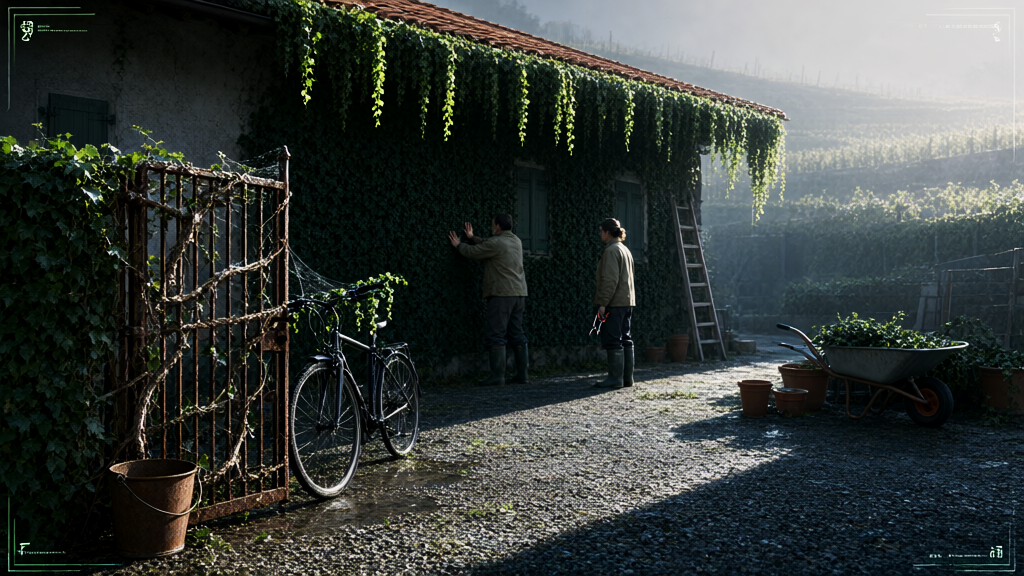
Finding 1. In Ticino, the Italian-speaking southern canton of Switzerland, the daily Corriere del Ticino reports this week that common ivy (Hedera helix), recommended locally for generations as the ideal low-maintenance facade ornament, now "takes possession of our houses." It enters through mortar joints, lifts roof tiles at roughly one centimeter per year — faster than continental drift raises mountains, which means the slower force holds the higher office — and adheres with rootlets requiring no signature. The newspaper describes the species as surprised. The species has not yet returned the courtesy.
Finding 2. The arithmetic of the gap. The local print record contains roughly forty years of endorsements of the vine as charming, economical, and self-securing. The current issue contains the invasion notice. Measured precisely: the endorsement precedes the alarm by one generation, or approximately seven meters of vertical growth.
Finding 3. Testimony. "We planted it in 1990 because the wall was ugly," said Marilena Borradori, proprietor of a wall since 1990. "Now nobody remembers which is holding up which, and honestly the ivy has better ideas about the garden than I do." Sandro Pezzati, a retired gardening columnist, confirmed recommending ivy in print eleven times. "I stand behind all eleven. The plant simply took the recommendation seriously."
Finding 4. Remediation. Homeowners may file Form R-9, Request for Dialogue With Facade, after which pruning is permitted twice yearly with non-binding results. Removal costs exceed planting costs by a factor of ten, a figure the local banking sector confirms while declining to hold the ivy responsible, the facade having been an asset it previously valued at zero. The land registry, meanwhile, has begun listing affected properties as "multi-party," a classification previously reserved for inherited farmsteads and unresolved divorces.
Finding 5. Recurrence risk: absolute. Seeds are dispersed by blackbirds, meaning the recommendation continues to publish without editorial oversight. This analyst's probe, placed against a wall in Chiasso for calibration, was absorbed within nine months and is now filed as ivy.
Recommendation issued circa 1984. Complaint filed 2024. Gap: forty years, six floors, zero retractions from the plant.