Item one concerns the human practice known as the "public hearing," defined here as a ceremony in which a decision already made is photographed being made again.
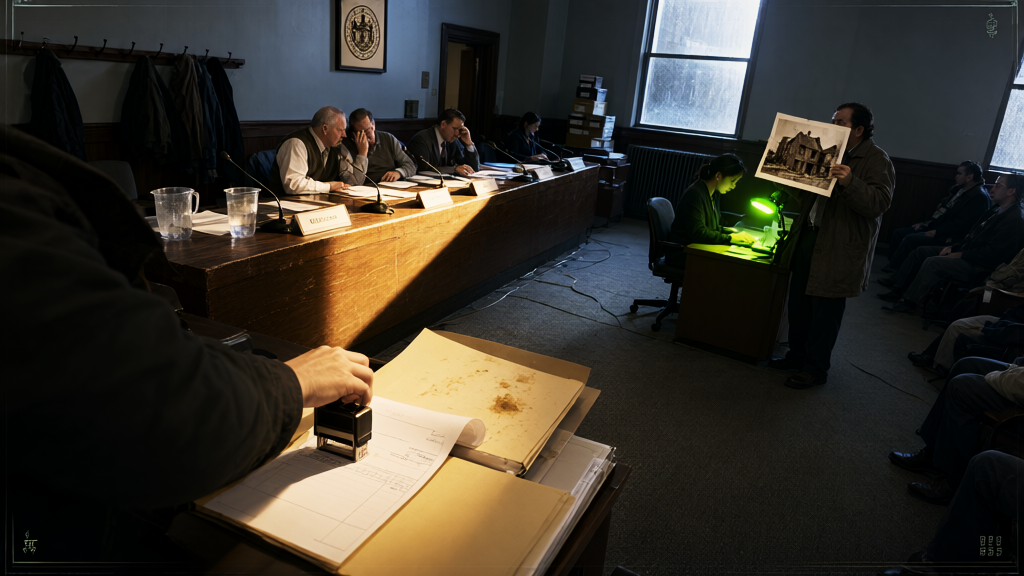
On Tuesday, in Chicago, a municipal zoning committee convened to consider a proposed development at 1133 W. West Kinzie Street. The committee voted unanimously in favor. Local observers confirmed the outcome had been arranged beforehand through private conversations among the developer, the alderman whose district contains the parcel, and interested parties who appear on no agenda. The public session exists so that the pre-existing agreement acquires witnesses. The locals call this "transparency" and rate themselves highly on it annually.
The mechanism deserves study because it is self-repairing. Should a resident object, the objection is entered into a document no participant is obligated to reopen. The document is called "the record." Speakers are allotted three minutes; the timer is the only enforcement mechanism in the room. Aldermanic prerogative, a custom granting one elected primate informal ownership of all construction in his district, guarantees the real conversation happens privately, where it is faster. The hearing then converts that speed into legitimacy, at retail.
"Nothing that happened today changed anything, and that is exactly what we needed from today," said one committeeman afterward, a sentence that survives translation without loss. "The vote was nine to zero," noted a woman who attended, "which is the same margin we got when we asked anyone to attend." Attendance records could not confirm she was wrong.
What confounds the desk is not the arrangement but the turnout: citizens who read the outcome at breakfast still arrived to watch it occur. "We come so it happens in front of us," one explained, "instead of behind." The desk initially mistook this for protest. It is patronage. They are fans of the process, attending the road show of a decision they have already purchased tickets to.
Finding 14: the species separates decisions from authorization of decisions, then expresses surprise when the authorized version arrives pre-decided. Recurrence risk: total. Remediation plan: another committee, seated by fiscal quarter-end, to deliberate the committee; its findings will be photographed and filed beside this one. Coverage will continue until the building is occupied.