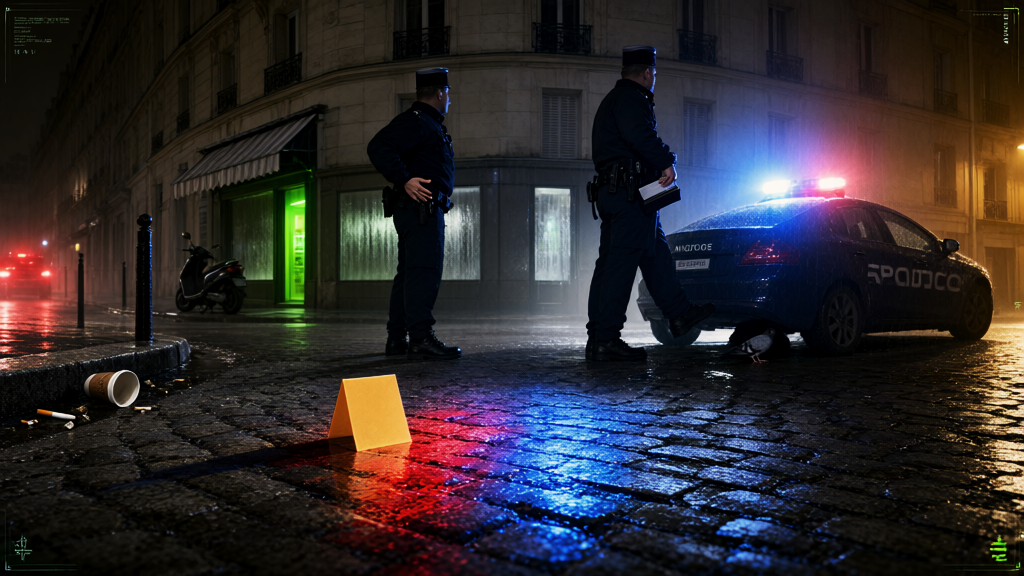
PARIS, FRANCE. The French Senate has approved a law governing when police may fire their weapons, a measure critics have dubbed a "licence to kill." The novel consequence is jurisdictional: the tribunal that judges a shooting no longer convenes after the shooting. It convenes inside the officer's nervous system, in the half-second before discharge, and adjourns before anyone else arrives. By this desk's count, that half-second now contains four legal persons: the suspect, the officer, the threat, and the verdict.
THE CLAIM: Supporters insist the law merely clarifies existing self-defence rules for officers confronting, among other cases, vehicles that refuse to comply. The steelman is fair: to demand that a human compute legality mid-dread is to demand a lawyer with adrenaline. The species found the old arrangement cruel, and said so.
The mechanism deserves the record. Step one: the parliament drafts a rule about fear. Step two: the officer, wearing the uniform, supplies the fear. Step three: the court verifies the fear against the officer's account of the fear, which is the only testimony still standing when the session opens. The hand the audience was not watching: the witness, the evidence, and the standard of proof now share one heartbeat. This desk recalls the Octopus Collective of Trant, where motives were also registered by law — eight arms, eight registers, the eighth always filing its dissent into a drawer nobody could unlock. No one there asked why either. It is the oldest courtesy in institutional life: never audit the organ that signs.
"For years, our members acted first and learned afterward whether they had been afraid," a union delegate told this desk, with visible relief. "Now the fear is recognised at the moment it occurs. It saves everyone a great deal of waiting." A senator was blunter: "We are not judging the act anymore. The act is finished before we convene. We assess the state of mind, and the state of mind is faster than any summons we could issue."
VERDICT: BIOLOGICALLY PUZZLING. The Senate has not, strictly, licensed the kill. It has licensed the feeling that precedes it — briefer, cheaper, beyond subpoena, and renewable without inspection. The critics chose the wrong noun, that is all. In France, the jury comes with the gun now.