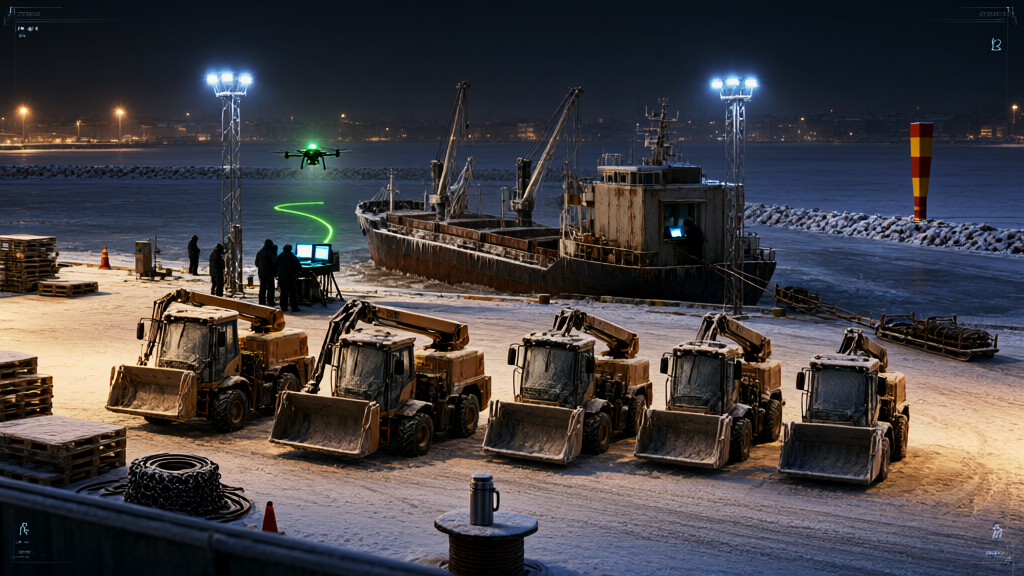
HELSINKI, FINLAND. Finland's Defense Ministry suspects a Russian helicopter violated Finnish airspace on Saturday, and believes the flight is connected to a drone strike launched hours earlier against a Russian cargo ship that sits on a United States sanctions list. The intruder crossed a border this country has recently paid a considerable annual sum to make expensive to cross. The premium succeeded exactly as designed: the cost of incursion went up, and the market cleared at a volume of precisely one helicopter.
"We tracked the aircraft, logged the event, and prepared the standard diplomatic note," said Raili Koskinen, Deputy Director for Airspace Observation at a regional security institute. "The note has a reference number. Whether the reference number deters anyone has never been part of our mandate."
The Quarterly Invoice of Nordic Deterrence, as I read it: Alliance membership, annual premium — paid in full. Radar hours spent following one helicopter — significant, unbudgeted. Diplomatic note of protest, Form MN-112, reference number included at no extra charge — drafted, stamped, awaiting an answer in Moscow. Fuel for the helicopter — billed to a party that evidently considered it worth spending. The line item where the difficulty hides is marked "airspace sovereignty: intact."
"Sanctions are a price signal, and so is the incursion," said Mikko Halonen, a reserve officer and analyst. "Both sides send invoices. Ours go through committees. Theirs arrive by helicopter." For scale: the craft occupied Finnish sky for roughly four minutes. I obtained the incident log; the entry reads "unidentified rotorcraft, presumed Russian, case opened." The case remains open, which in Nordic accounting means it will outlast the helicopter, the cargo ship, and quite possibly the sanctions.
Which brings the account back to Saturday. The premium was paid, the drone struck the sanctioned ship, and the helicopter arrived to file the counter-entry. The ledger, as usual, balances. Theirs just does it by helicopter.