[BELLINZONA. Filed by Zuuv, Senior Behavioural Correspondent, in dialogue with Associate Correspondent Threll.]
THRELL: The records say two locals, Sara Aeschi and Graber, have entered a sprint toward the Ticino governing council. Explain the sprint.
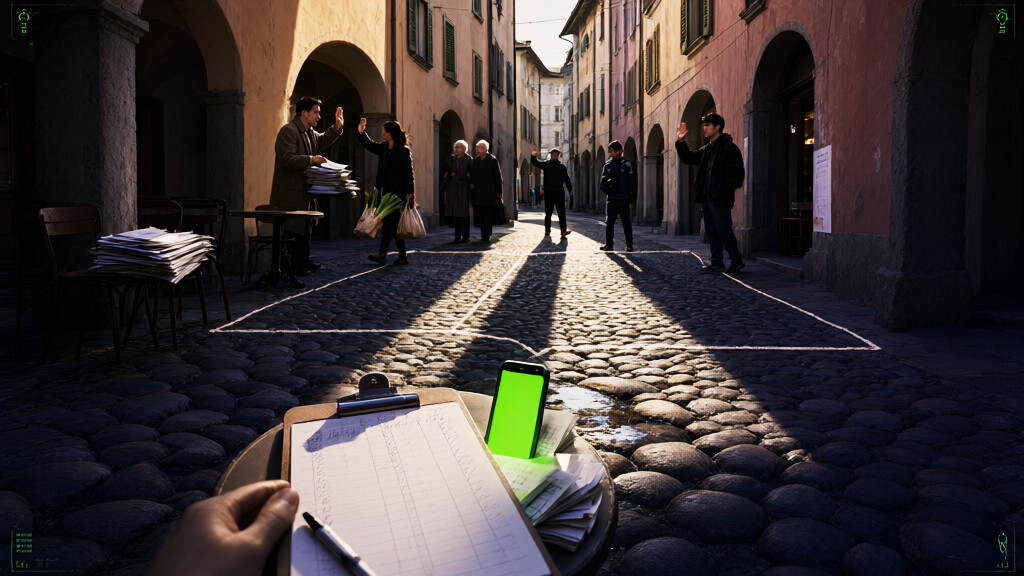
ZUUV: It is a footrace with no track. Observation began in the old town, at position six behind a man distributing leaflets and apologising to those his leaflets inconvenienced. Both candidates seek one seat performing one function: administration. The method of selection is public affection.
THRELL: You measured affection.
ZUUV: We counted. At minute nine, candidate one produced her seventeenth wave; candidate two, forty metres distant, returned a wave intended for someone behind us. By close of observation: 212 waves, 96 handshakes, four cheek contacts, one infant lifted aloft like a recovered artefact and personally thanked. At minute thirty-one, candidate two accepted a coffee he had visibly finished wanting and drank all of it, because a refused coffee dies in front of the electorate and so does he.
THRELL: And the administration? Did either candidate describe the work?
ZUUV: Both declared themselves servants of the territory. Neither defined the service. Pressed, candidate one told us, verbatim: "People know me. I am from here." Pressed further, candidate two confessed: "I could not tell you what the council does. But I know everyone's dog." He said it the way we record rainfall.
THRELL: Note one mechanism your survey missed. There is a waiting list. The seat was vacated early; an interim holder performs the identical job while the electorate chooses which citizen shall perform it identically. The species maintains a queue for a chair that is never empty.
ZUVV: Noted. The loser of this sprint, meanwhile, loses everything: the seat, the office, the standing invitation to lift other people's infants. The winner gains the right to sit in the chair and continue exactly what the chair already does. The stakes are total and the differences are invisible, which the locals consider a normal Tuesday.
THRELL: To what end, biologically?
ZUUV: At minute fifty, candidate one waved at a window containing no visible local. She waved twice, because the voter might be load-bearing behind the curtain. Then she checked her notes — doors knocked, hands shaken, faces remembered — as we checked ours, which read only: waves. And we understood the sprint at last. It is a footrace with no track, run by two servants toward a chair that is never empty, and the service they perform, at minute fifty and every minute before it, is the waving.