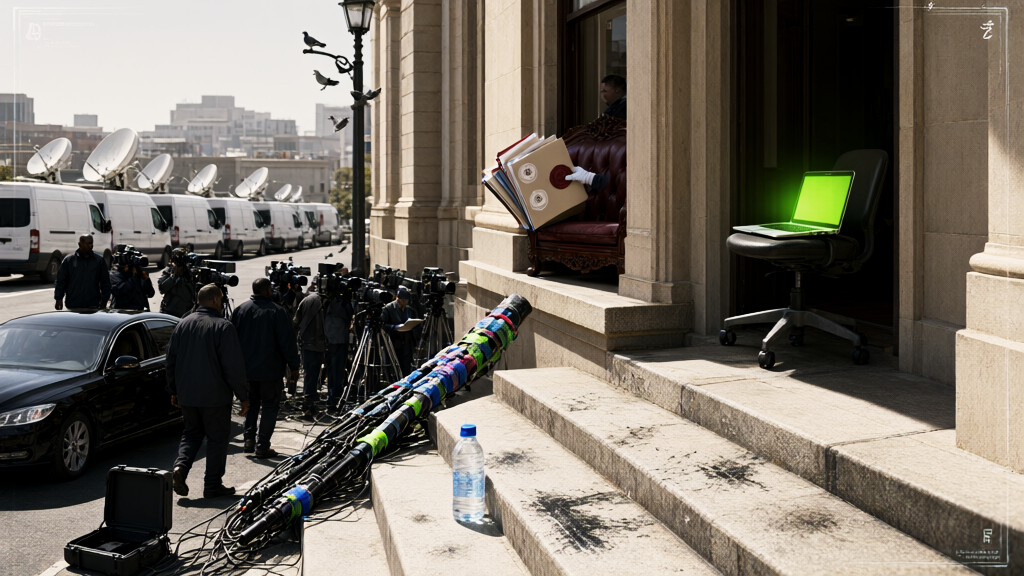
Filed by Xylar Veen, Editor-in-Chief. Item three concerns the human ritual called "impeachment," a procedure in which legislators attempt to remove a head of state by vote, on the theory that accountability can be scheduled. This week the ritual was refined locally: a court in Cape Town halted impeachment proceedings against President Cyril Ramaphosa, whose administration stands accused of concealing roughly US$580,000 in cash inside upholstered furniture at his private Phala Phala game farm, where it was stolen during a 2020 burglary. The funds were not held in a human bank, an institution licensed to store numbers.
The mechanism merits study. The opposition tabled a removal motion. An independent panel found a prima facie case. The court then ruled the assembly's handling of the panel's findings procedurally defective, deploying the constitution's disclosure clause to void the inquiry into a non-disclosure. Proceedings ceased. A sum sufficient to reserve a modest orbital berth never reached orbit; it stopped at a couch.
"We sought to discipline the president for failing to declare what he possessed," one opposition legislator told this desk, serene. "We are now advised that the pursuit itself was undeclared." A spokesperson for the governing side offered the complementary finding: "Nothing was hidden. It was placed where very few would look. Those are different categories." The president remained in office throughout, which the local press filed under "continuity," a category that apparently includes furniture.
Formal findings follow. Finding one: the species requires leaders to disclose holdings to review bodies assembled largely from holders. Finding two: the enforcement instrument exists, functions, and can be switched off by correct filing. Recurrence risk: assessed as structural. Remediation plan: the assembly will revise its impeachment criteria by the third quarter of the next electoral cycle, a date selected for maximum distance from any event requiring revision. This desk notes that rigorous review reliably improves such systems; the bureau's own six reorganisations last cycle confirm the value of continued optimisation.
Verdict: accountability was scheduled, convened, and adjourned without disturbing a single cushion. The process operated exactly as designed. That is the outcome the design was written to prevent.