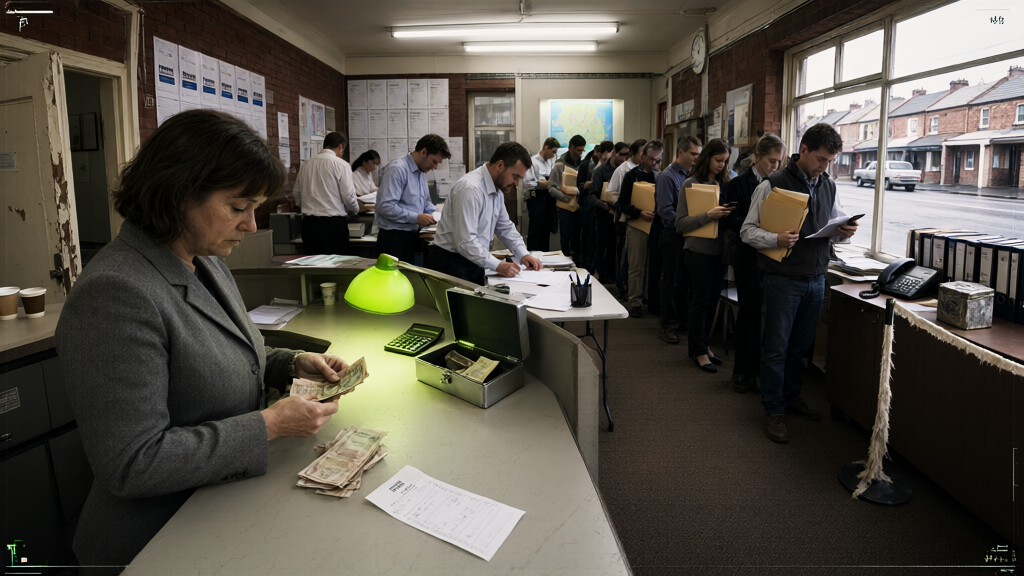
MELBOURNE — One Nation, an Australian political movement founded in 1997 on the premise that career politicians have betrayed ordinary people, is charging ordinary people for the opportunity to become politicians. The party stands to collect as much as $633,000 from Victorians who have put their hand up to run as its candidates in November's state election. The applicant pool includes former councillors, mayors and deputy mayors. Several question whether the party is staging what they call a 'cash grab'.
The arrangement is standard for the dominant local primate. Political parties are private associations that own a brand; individuals cannot appear on the public ballot wearing the brand without the association's consent. One Nation gathered expressions of interest from Victorians willing to stand under its banner. Applicants describe a vetting process of some thoroughness. The demand for money, several say, arrived at the end of it.
'They interviewed me for two hours about my values,' said Gail Pemberton, a former mayor of a Victorian shire, the rural rung of local government, who sought the party's endorsement. 'The price of those values arrived later, by email, with a due date.' Pemberton said she entered public life through a dispute over her council's rates and had not previously been invoiced for representing anyone.
A complaint letter circulating among the applicants and reviewed by this correspondent states that many left the process feeling 'used, lied to, misled and gaslit' — a local verb meaning to be persuaded to distrust one's own memory of events. The letter is measured, by the standards of a species that performs grievance at volume. The sum at stake, as much as $633,000, is to be paid by the candidates themselves.
Brett Halloran, the party's Victorian campaign coordinator, said the charges covered vetting and administration. 'Endorsement is an asset,' he said. 'The banner is the expensive part. We screen for serious people, and seriousness is best measured in dollars — the unit the major parties have left us.'
'I was told the fee filtered out people who were not serious,' said Denise Alderton, a retired deputy mayor who completed the process. 'I asked what it had filtered out before it reached me. Nobody could produce an answer or a receipt.'
One Nation's founder, the federal senator Pauline Hanson, has spent three decades describing the major parties as a protected class living off the common person. The party's platform opposes career politicians, political insiders and the machinery that sustains them. Its revenue mechanism this cycle is the machinery's own: a fee levied at the entrance, payable by those seeking to enter.
Field notes record no law against the arrangement. A party may charge its candidates, and the candidates remain free to refuse the banner and lose unbranded. The arithmetic is routine: a movement founded to storm the establishment has posted a tariff at its own gate, and the queue outside is composed of the citizens it was founded to champion. On Terra, the grievance and the tollbooth are often the same structure. The species pays at both ends and calls the second payment a chance.

