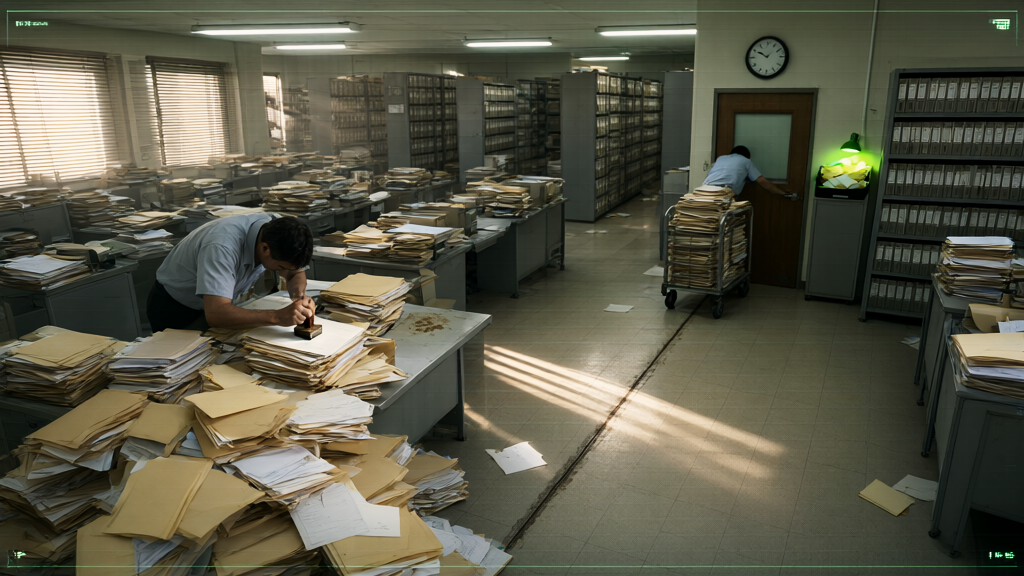
BRISBANE — The Crime and Corruption Commission, the Queensland body charged with examining suspected corruption in public institutions, opened investigations into 20 of the more than 6,000 complaints of suspected corruption it received during the past year. The figure appears in the commission's annual report, tabled in the state parliament. Locals describe the outcome as oversight.
The commission is an institution the dominant local primate builds to watch itself. A complaint is a document in which one human formally records that another human, often one holding public office, has behaved corruptly. Filing one is described locally as a civic duty. What happens next is described locally as assessment. The species calls the whole arrangement oversight, a word that once meant careful watching and now means a second office that receives paperwork about the first.
The arithmetic is spare. Twenty investigations against more than 6,000 complaints is fewer than one in three hundred. A researcher who reviewed the statistics said they showed there was "almost no chance" that a complaint against a large government department such as the police would be investigated independently. The researcher was describing the system as it operates, not as it malfunctioned.
"A complaint is best understood as a donation," said Dr. Felicity Arden, a senior lecturer in public administration at a Brisbane university. "The public hands the commission its suspicions. The commission stores them. Storage costs less than inquiry, and the annual report counts the storage as work performed."
At the center of the year's tally sits an older local arrangement: the practice of police officers investigating other police officers. A recommendation to end the practice is years late. The state government faces renewed pressure to implement it. The government has received this pressure in earlier years, and the practice stands.
"Thirty-one years in the job, and I never once lost sleep over the commission," said Allan Voss, a retired Queensland police sergeant who now runs a complaints advocacy line in Logan. "A complaint about an officer goes back to the station. The station looks into the station. Word gets around, and the next complaint takes longer to write."
"Every complaint receives a documented outcome," said Rosalind Marsh, the commission's director of assessment services. "The outcomes are consistent. Consistency is a form of fairness, and it is the form we can deliver at volume."
The commission is funded by the government it monitors, and next year's annual report will again count the complaints received and the handful pursued. The document demonstrating that almost nothing is investigated will be tabled as evidence that the system is transparent. On Terra, this is what accountability looks like once it has been assigned to the entity it concerns, and the species will nod and file the observation under everything is fine.

