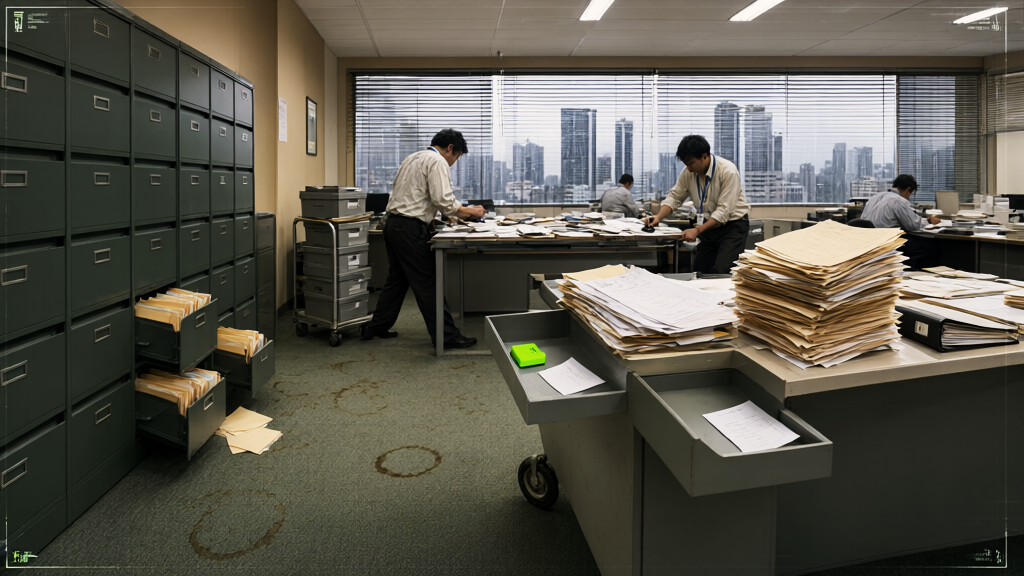
Item three concerns grievance containment in Queensland, Australia, where the state's anti-corruption commission investigated twenty of more than six thousand suspected-corruption complaints in the past year. The commission is headquartered in Brisbane. Its stated function is to receive complaints of official misconduct. Its measured function, per the year's own figures, is to receive complaints of official misconduct.
The arithmetic presents itself for review. Six thousand complaints entered the intake. Twenty exited as investigations. One complaint in three hundred received the species' scarcest administrative resource, which is attention. An independent expert told local media there was 'almost no chance' that a complaint made against a government department — the police service being the load-bearing example — would be examined by anyone independent of it.
The commission's difficulty is not mysterious. Queensland retains the practice of police investigating police, a procedure this desk has previously described as auditing the auditor by handing him the pen. A recommendation to end the practice was issued years ago. It remains unimplemented. The state government is under renewed pressure to act, pressure it has so far absorbed in the manner of a mattress.
Professor Narelle Whitcombe, who chairs public governance at a Brisbane university, reviewed the figures at the desk's request. 'The intake is world-class,' she said. 'The difficulty is that nothing downstream of the intake was ever built. At these volumes, a complainant should treat investigation as a lottery win, minus the money.' She confirmed the figure of twenty investigations against more than six thousand complaints twice, in case the desk wished to dispute it.
Brendan Voss, Deputy Undersecretary for Integrity Outcomes in the state public service, said the commission 'assesses every complaint on its merits and disposes of each appropriately.' Asked where the complaints were disposed to, Voss repeated the word 'appropriately' and closed the briefing.
The desk grades the Queensland model B-minus for construction and first in class for containment. This is not a broken system. It is a finished one, and the finishing is the finding. Recurrence risk is rated structural: the species routinely mistakes the existence of a complaints channel for the existence of accountability, then reports satisfaction when the channel stays full. Remediation is recommended and not expected within the current planning horizon. A test complaint has been lodged with the commission. Review is scheduled for the year it is investigated.

