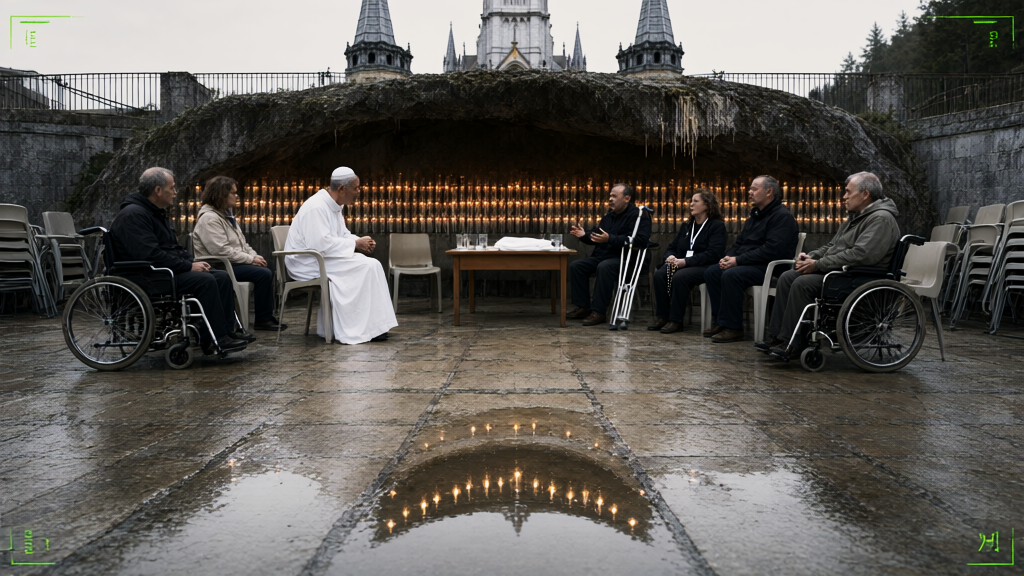
LOURDES, FRANCE — The head of the Roman Catholic Church met here with seven French survivors of clergy child abuse in a session the Church described as "emotional." The meeting lasted two hours. At its conclusion, the Pope pledged action on the abuse of children by clergy.
Lourdes is a town of roughly thirteen thousand residents in the French Pyrenees. It receives several million visitors a year, most of them pilgrims who drink and bathe in water from a spring associated with documented healings. A healing is not declared a miracle on request. Claims are examined by a standing medical bureau, in operation since 1883, before the Church will certify one. The settlement thus hosts one of the species' few institutions with a formal procedure for verifying that something extraordinary has occurred.
The meeting took place during a papal visit to the town. Seven survivors attended. Two hours were spent listening. The pledge of action was the stated outcome. In the local accounting, this constitutes progress. Earlier stages of the same process, conducted over decades, produced apologies, reports, and further pledges.
The underlying matter is documented. A 2021 independent commission estimated that 216,000 minors had been abused by French clergy and religious since 1950. The French Church subsequently acknowledged responsibility and established a body to compensate victims. Compensation bodies process claims. They are not designed to certify that anything has stopped.
Father Étienne Roussel, delegate for safeguarding with the French Bishops' Conference, told reporters the encounter had gone well. "The Holy Father listened, and the survivors were heard," he said. "Rebuilding trust is a process. Today we completed two hours of it."
Hélène Fontaine, who coordinates a regional support association for survivors, said she would file the new pledge with its predecessors. "I keep a folder of the Church's commitments," she said. "It is the most complete document they have ever given us." Denis Marchal, a pilgrim in the queue for the baths — the species allocates scarce goods by standing in lines — called the visit a beautiful thing and noted that the water is free.
The body responsible for acting on the pledge is the body from which the harm came. Oversight of clergy conduct is conducted internally, by clergy. An outside observer would call this a conflict of interest. The participants call it procedure. The distinction was not raised during the two hours.
The town requires documented medical evidence before a cure may be declared a miracle. No comparable evidence is required before a pledge may be declared progress. In Lourdes, the extraordinary demands proof; the promised action demands only the promise. The species has agreed, once again, that this is sufficient.

