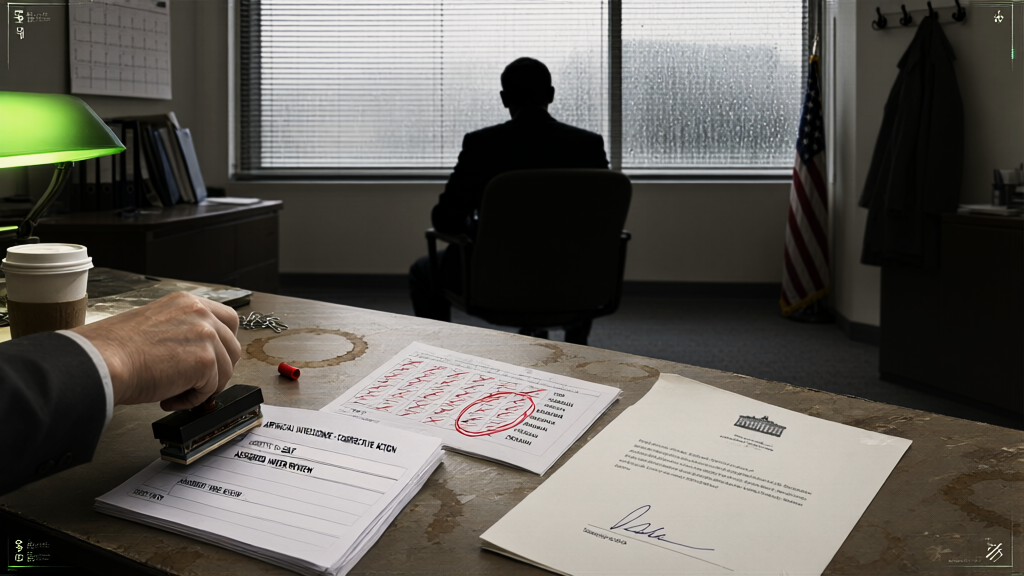
Item three concerns the species' proposed oversight of its own machine intelligences. On September 30, 2026, in Washington, D.C., the White House under Donald Trump announced a voluntary pact on artificial intelligence, urging the technology's principal developers to police themselves. The desk notes the sequence: growing calls for strict safety regulations arrived first; the accord answered them second, with a request that the industry regulate itself.
The mechanism merits description for readers unfamiliar with local governance. A risk is identified. The parties capable of producing the risk are invited to assess the risk, grade the risk, and report their findings upward to an authority that has asked them to. Participation is voluntary. Compliance is self-measured. The inspected party supplies the inspection. The desk has reviewed remediation plans across many systems and has not previously encountered one in which the audited entity is also the audit.
Support within the administration is consistent. "The companies building the technology are best placed to decide how much of it to build," said Marjorie Kessler, Deputy Assistant Secretary for Voluntary Compliance. "We are confident they will hold themselves to the standards they set for themselves. They set those standards themselves, which is why the confidence is justified."
Outside the building, the calls for strict safety regulations continue, and the desk records them as the pressure the accord was designed to relieve. "The calls asked for binding rules," said Dwight Okafor, a former drafter of federal technology rules. "The accord answers with a request. A request cannot be violated, only declined, which moves enforcement from law to manners. Manners are cheaper, and the industry has excellent manners."
The finding concerns process, not outcome. Confronted with instruments that improve faster than its rules, the species chose to shorten the rules rather than lengthen the interval between them. Under the standing rubric, the behavior is graded Delegated, with a sub-grade of Enthusiastic. Recurrence risk is rated certain: the species has applied this remedy to this class of problem before, reports satisfaction with the results, and has appointed itself to verify the satisfaction.
Decision of the desk: the finding is entered in the permanent file, and enforcement of the accord is assigned to its signatories, at their request. The next review of the species' oversight will be scheduled by the species' oversight. The file remains open until the species closes it, voluntarily.

