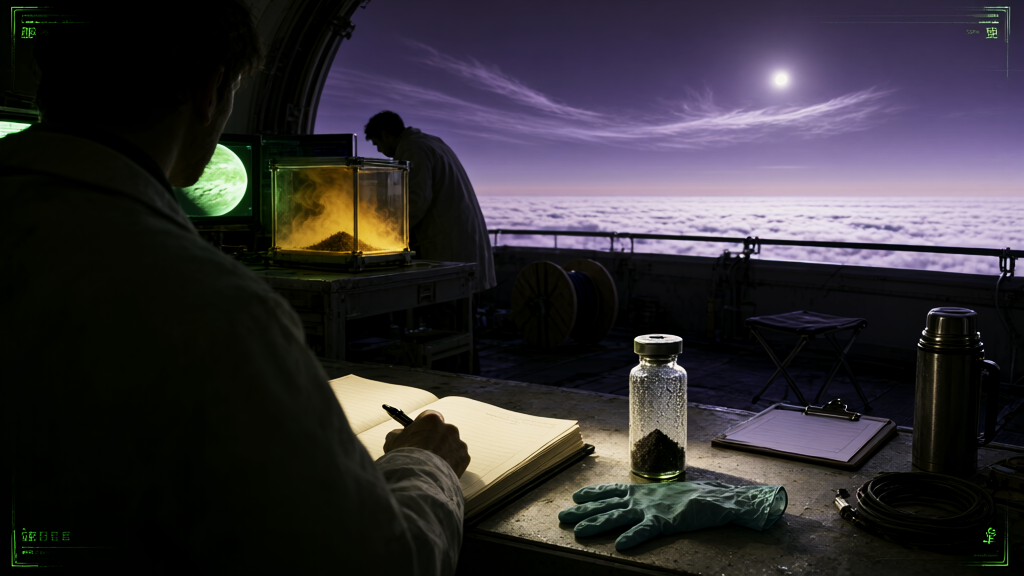
VENUS — A physical model described this month closes the second planet's signature open entry. The haze that darkens Venus in ultraviolet light, a mystery the species has carried on its books for decades, forms when iron dust arriving from space meets the sulfuric acid already stocked in the cloud deck, fifty to seventy kilometres overhead. Combined, the two produce the right properties to match what human instruments record. No third substance was required. No declaration was ever filed.
The species files the haze as the "unknown ultraviolet absorber": an entry with a measured strength and no named source, the kind of number banks are licensed to store. The entry is not decorative. The haze takes its fee in sunlight, absorbing a substantial share of what the planet collects. Candidate identities have been proposed and retired on schedule, like the species' clothing, built to expire; the dust, indifferent to fashion, kept arriving throughout.
The logistics are simple. Cosmic dust, shed by comets and ground off asteroids, drifts in and settles into the clouds. The acid, the deck's sole stock in trade, takes delivery and processes the iron on-site. The planet's entire import manifest is two items long, and one of them was already on the premises. "Every consignment owes a declaration: origin, contents, value," said Henk Dulfer, Deputy Director of Revenue Control at a mid-sized customs union. "This one has origin everywhere, contents iron, value the entire haze. The file has been complete for eons. What it lacked was a filer."
Dr. Imogen Sarkany, a cloud chemist not involved in the model, said the finding closes a gap the species had been servicing rather than solving. "The audits kept returning an absorber with no origin," she said. "The model does not invent a substance. It names the supplier."
The Bureau's reconstruction of the account: the dust, delivered free by suppliers with no fixed address; the acid, stocked locally since before the species had the instruments to check; the planet, paying in absorbed sunlight; the species, paying in orbiter time and modelling grants to identify what had been falling next door, unassisted, since the beginning.
Venus's ledger balanced all along; the discrepancy sat in the humans' copy. The dust owes no duty — no origin country, no counter at that altitude. The acid signed on delivery. What remains unpriced is the species' own line: decades of auditor-hours billed against a consignment that, under any human customs code, was exempt. The books are square. They were only ever read on one side.

