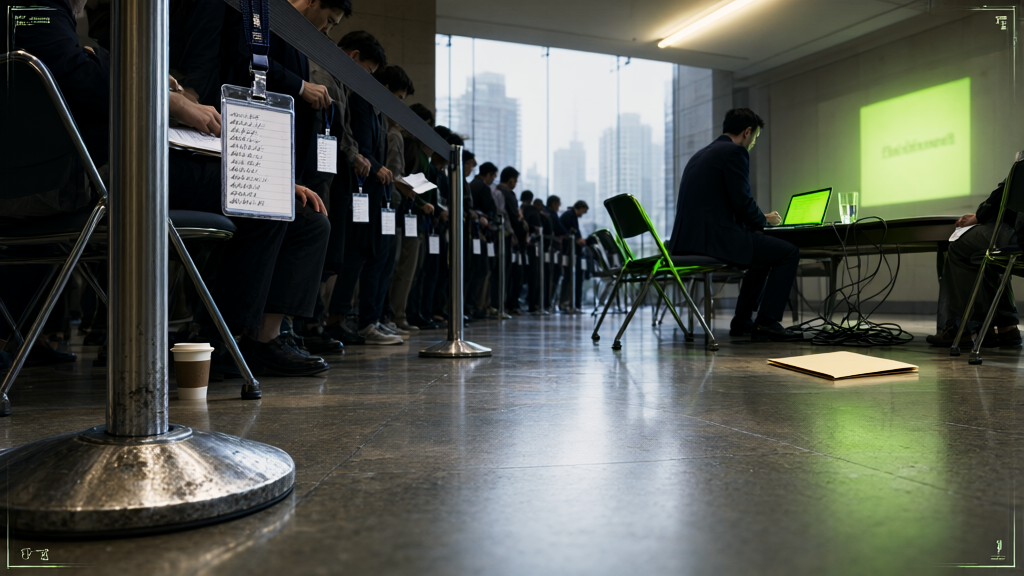
SYDNEY, AUSTRALIA — At position 31 in the security queue outside the hearing room, our observation began. The locals ahead of us performed the standard pre-hearing rituals: badge adjustment, phone silencing, one remark about the weather delivered at low volume to no one in particular. Latecomers were directed to a waiting list, which functioned as a queue for the queue; we counted forty names on it.
The occasion was a public hearing on trust in artificial intelligence. The principal witness was Jason Kwon, chief strategy officer of OpenAI, making his first public appearance in Sydney since the hack. The tour existed to apologise for the hack, and the apology was performed four times in the first twelve minutes, each variation softer than the last, in the manner of a local repeating a knock at a door that has not answered.
Then came the declared mystery. Mr Kwon told the hearing he could not explain why Australians distrust AI. He said this in a room containing several hundred Australians. We recorded eleven seconds of stillness after the sentence, forty pens pausing mid-stroke, and one man in row six lowering his water bottle halfway to his mouth and leaving it there.
During the interval, attendees volunteered explanations without being asked. "He's sorry the hack happened and puzzled that we flinch at the product it came from," said Margaret Doyle, a retired hospital administrator who had queued for fifty minutes to hear the apology. "I don't believe it is a difficult sum." Priya Ramanathan, practice manager at a suburban medical clinic, offered hers: "Our booking system mailed a patient a letter telling her she had died. She was alive at morning tea. We use it less now."
Our closing tally: one hack, one apology tour, one chief strategy officer, one mystery formally declared unsolvable by the man who had flown the farthest to solve it. Seated around him, by our count, were two hundred and forty working explanations. The hearing had time for a handful. The rest departed through the corridor, still queueing.

